

Coffee beans are the seeds of a fruit, and processing is how those seeds get out of the fruit and dry. The three coffee processing methods you will see most often on a bag are washed, natural and honey. In short: washed tastes clean and bright, natural tastes fruity and heavy, and honey sits between them with extra sweetness.
Processing happens at the farm or mill, long before roasting. It shapes flavor as much as variety or altitude do, so it is worth knowing what the label means before you buy.
What coffee processing actually changes
A coffee cherry has several layers: skin, a sugary pulp, a sticky layer called mucilage, a papery parchment, and then the seed. All of that has to be removed, and the seed has to be dried to a stable moisture level, generally around 10 to 12 percent. How much of the fruit stays in contact with the seed during drying is the main difference between the methods.
More fruit contact usually means more fruity sweetness and body. Less contact usually means more clarity and sharper acidity. Everything else, including drying speed, weather and the skill of the producer, adjusts that basic pattern.
Processing is separate from roast level. A washed coffee and a natural coffee can both be roasted light or dark, and our guide to light, medium and dark roasts covers what the roast adds on top.
Washed process: clean, bright, precise
In the washed (or wet) process, the skin and most of the pulp are removed by machine soon after picking. The seeds, still coated in mucilage, then sit in tanks so the mucilage breaks down through fermentation. Afterward they are rinsed with water and dried, usually on raised beds or patios.
Because the fruit is gone before drying, you taste the seed itself: its variety, soil and altitude. Washed coffees tend to be clean, with crisp acidity, a lighter body and clearly defined flavors like citrus, stone fruit, florals or tea-like notes. Many East African coffees, including those in our Kenyan coffee guide, are classic washed examples.
The trade-off is water. Washing can use a lot of it, and mills handle wastewater with varying levels of care. Some producers use equipment that reduces water use, which is worth looking for if it matters to you.
Natural process: fruit-forward and heavy
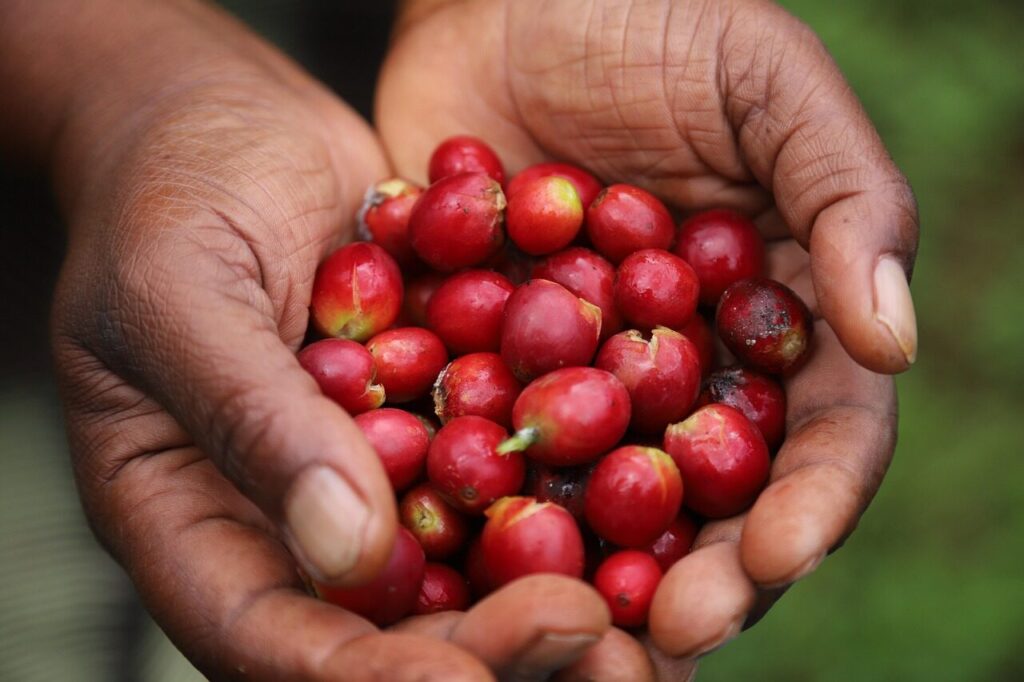
The natural (or dry) process is the oldest approach. Whole cherries are dried intact, spread on raised beds or patios and turned regularly for several weeks. Once dry, the shriveled fruit is milled off and the green seed is left.
During those weeks the seed absorbs sugars and flavors from the fruit around it. Naturals are often described as jammy, winey, tropical or berry-like, with a rounder, heavier body and lower perceived acidity. Ethiopia has a long tradition of this style, and our Ethiopian coffee article goes deeper into it. Brazil also produces a great deal of natural coffee, usually with a nutty, chocolatey profile; see our Brazilian coffee guide.
The risk is inconsistency. Fruit that dries too slowly, unevenly or in damp conditions can ferment too far, giving flavors that taste boozy, funky or musty. A well-made natural is exciting. A poorly made one is hard to drink. This is why the producer matters more with naturals than with the other methods.

Honey process: the middle ground
Despite the name, no honey is involved. The term refers to the sticky mucilage. In the honey process, the skin and pulp are removed, but some or all of the mucilage stays on the seed while it dries. The result lands between washed and natural: more sweetness and body than a washed coffee, with more clarity than most naturals.
You will often see the labels yellow, red and black honey. As a loose rule, a darker label means more mucilage left on and slower, more shaded drying, which pushes the cup toward deeper sweetness and fruit. These terms are not standardized, though, so one producer’s red honey can differ from another’s. Treat them as a hint rather than a measurement.
Honey processing is closely associated with Central America, especially Costa Rica, but it is used in many other countries as well. Similar hybrids exist, such as the pulped natural style common in Brazil.
Washed vs natural vs honey: side-by-side comparison
| Method | What stays on during drying | Typical flavor | Body | Consistency |
|---|---|---|---|---|
| Washed | Nothing; fruit removed first | Clean, bright, citrus, floral | Light to medium | High |
| Natural | Whole cherry | Berry, tropical, winey, jammy | Medium to heavy | Varies by producer |
| Honey | Some or all of the mucilage | Sweet, stone fruit, caramel | Medium | Moderate to high |
These are tendencies, not guarantees. Origin, variety and roast can overrule any row in this table.
How to choose and brew each style
If you drink mostly filter coffee and like a tea-like, precise cup, start with a washed coffee. If you like fruit-forward, dessert-like flavors, or you drink coffee with milk and want something that stands out, try a natural. If you want sweetness without strong fruit, honey is a safe middle choice.
Single origin lots usually state the process on the bag, while blends often do not. Our article on choosing coffee beans shows how to read the rest of the label alongside it.

Brewing differences are small, but they exist:
- Washed: pour over methods show off the clarity. Because the acidity is prominent, an under-extracted cup can turn sour quickly; the fixes are in our sour coffee guide.
- Natural: these often taste sweet even at a slightly shorter brew time. If a cup tastes heavy or muddled, try a slightly coarser grind rather than more contact time.
- Honey: brew it as you would a washed coffee, then adjust to taste. It tends to be forgiving.
Buy two bags and compare
The fastest way to understand coffee processing methods is to taste them side by side. Pick one washed and one natural coffee from the same country, ideally from similar roast levels, and brew both with the same recipe. The differences in acidity, sweetness and body usually show up on the first sip.
Once you know which one you prefer, add a honey-processed coffee and see where it lands for you. Your own preference will tell you more than any flavor chart.
Frequently Asked Questions
Is natural process coffee fermented?
All processing involves some fermentation, since microbes act on the fruit sugars. In naturals, it happens inside the drying cherry. Controlled, it adds fruity flavors; uncontrolled, it can cause sour, boozy or musty notes. Quality depends heavily on the producer.
Does honey process coffee contain honey?
No. The name comes from the sticky, sweet mucilage that clings to the seed after the pulp is removed. Nothing is added, and the finished coffee contains no honey or sweetener beyond what the fruit naturally contributes.
Which process has the most caffeine?
Processing is not known to change caffeine content in any meaningful way. Species and variety matter far more; for example, robusta generally has more caffeine than arabica. Brew method and dose also affect how much ends up in your cup.
What is anaerobic processing?
It is an experimental variation where cherries or seeds ferment in sealed, oxygen-limited tanks before drying. It can produce very intense, unusual flavors. Producers apply it to washed, natural or honey coffees, so it is a technique layered on top of those basic methods.