

Yes, coffee goes bad, but not in the way milk does. Roasted coffee almost never becomes dangerous on its own. It goes stale: the aroma fades, the sweetness disappears, and the cup tastes flat or cardboardy.
So when people ask whether coffee goes bad, there are really two questions. Is it still safe? Usually yes, unless it got damp and moldy. Is it still worth brewing? That depends on the form it is in and how it was kept.
Does Coffee Go Bad? Safety vs. Flavor
Dry roasted coffee is a low-moisture food, which is why it does not spoil quickly. What changes is chemistry. Aromatic compounds escape, oils oxidize, and the flavors you paid for slowly fade.
The real safety concern is moisture. If beans or grounds were stored somewhere humid, or water got into the container, mold can grow. Brewed coffee is a different story, especially with milk, and we cover that below.
How Long Each Type of Coffee Lasts
These are rough guidelines, not hard rules. Roast level, packaging and storage conditions all shift the numbers. Treat the “best flavor” column as the window when coffee tastes its liveliest, and the “still drinkable” column as the point where it is safe but increasingly dull.
| Form | Best flavor | Still drinkable |
|---|---|---|
| Roasted whole beans, sealed bag | Roughly the first few weeks after roasting | Often a few months, but noticeably flatter |
| Roasted whole beans, opened | A few weeks from the roast date | Weeks to a couple of months, fading steadily |
| Ground coffee, opened | Days to a couple of weeks | A month or two, with muted flavor |
| Instant coffee, kept dry and sealed | Long-lasting | Very long, as long as no moisture gets in |
| Brewed black coffee | Within an hour or two | Up to a day, but tastes stale and sour |
| Cold brew concentrate, refrigerated | The first several days | About a week or slightly more |
| Green (unroasted) beans | Much longer than roasted beans | Often a year or more if kept cool and dry |
Pay attention to the roast date rather than the “best by” label. A best-by date is the manufacturer’s estimate of quality and may be many months after roasting. If a bag shows no roast date at all, assume the coffee is older than you would like.
Why Coffee Goes Stale
Four things work against roasted coffee: oxygen, moisture, heat and light. Oxygen is the biggest one. It reacts with the oils and aromatic compounds in the bean and slowly flattens the flavor.
Surface area explains why ground coffee fades so much faster than whole beans. Grinding exposes far more of the coffee to air, so the volatile aromas escape within days. That is the main reason we suggest grinding right before brewing. Our guide to grinding coffee beans covers how to do it well.
Freshly roasted beans also release carbon dioxide for days afterward. Some of that gas protects the beans early on, but very fresh coffee can bloom unevenly and taste a little sharp or gassy, especially as espresso. That is why many people wait several days after the roast date before brewing.
Roast level plays a part too. Dark roasts often show oil on the surface, which looks alarming but is normal for the style. We explain why in light vs medium vs dark roast. Shiny beans are not automatically old, though a dark roast with a sharp, paint-like smell likely is.
For practical ways to slow all this down, see how to store coffee beans so they stay fresh. We won’t repeat those steps here.
How to Tell If Coffee Is Stale or Spoiled
Your nose and your eyes will tell you most of what you need to know. Check in this order:
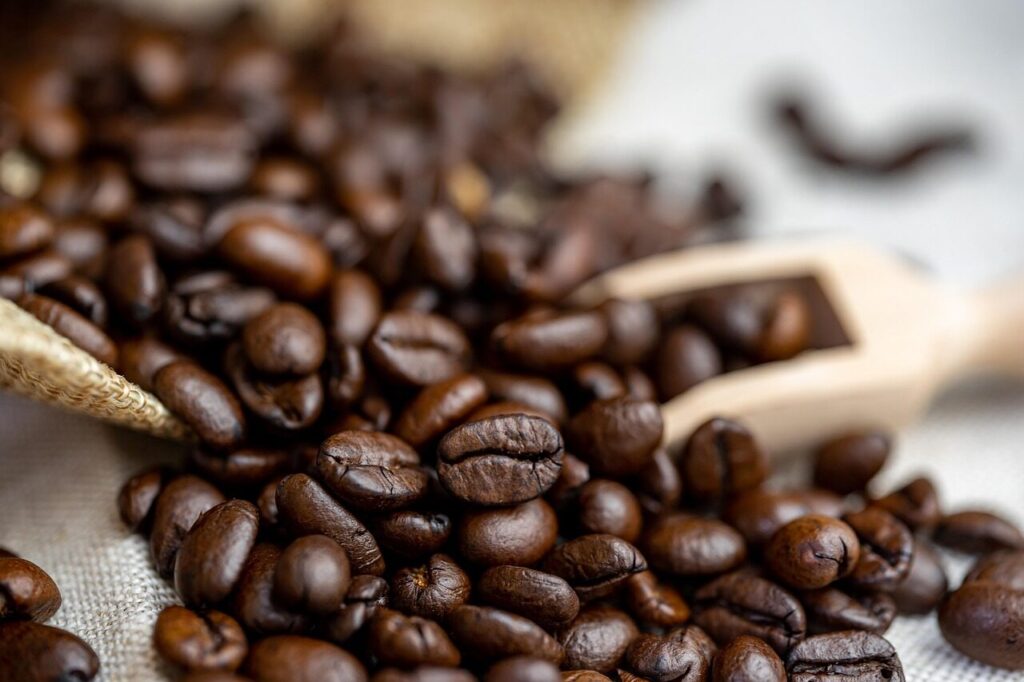
- Smell the dry coffee. Fresh coffee smells sweet, nutty, fruity or chocolatey, depending on the origin. Stale coffee smells faint, dusty or like old cardboard.
- Look for mold or moisture. Any fuzzy growth, clumping, damp spots or a musty, sour smell means throw it out. Do not try to pick out the bad parts.
- Watch the bloom. When hot water hits fresh grounds, they puff up and bubble. If they barely move, much of the gas is gone.
- Taste the cup. Stale coffee tastes thin, papery and dull, with little sweetness and a lingering bitterness. Rancid oils can add a sharp, unpleasant edge.
A flat cup does not always mean old beans. Over-extraction, water that is too hot or a grind that is too fine can produce harsh flavors from perfectly good coffee. If your cup tastes bitter, check our guide to common causes of bitter coffee before blaming the bag.
Brewed Coffee, Cold Brew and Milk Drinks
Brewed coffee changes much faster than beans. Left in an open cup or on a hot plate, black coffee turns sour and stale within hours, even though it is generally fine to drink for a while after that. Oxidation is the cause, and heat speeds it up.
Milk is a different matter. Coffee with dairy or plant milk should be refrigerated and not left out for long, because milk is perishable. If it smells off, discard it.
Cold brew keeps better because it is stored cold and is usually made as a concentrate. Keep it in a sealed container in the refrigerator and use it within about a week. If you make your own, our cold brew concentrate recipe includes the steps and ratios.
What to Do With Coffee Past Its Best
If the coffee smells okay and shows no mold, you do not have to throw it away. Stale coffee still has caffeine and some flavor. It just will not shine in a delicate pour-over.
- Brew it as cold brew with a longer steep. The cold, slow extraction hides some of the staleness.
- Use it in baking, where chocolate, spices and sugar cover the dullness.
- Make strong coffee for marinades or glazes.
- Freeze brewed coffee into ice cubes for iced drinks.
Used grounds are another matter. Wet used grounds can mold in a day or two, so do not store them in a closed container. They are better composted or thrown out.
A Simple Buying Habit That Prevents Waste
The easiest way to avoid stale coffee is to buy less of it, more often. A 250 g (about 9 oz) bag lasts a one-cup-a-day drinker around two weeks, assuming roughly 18 g (2 tbsp) of coffee per cup. That is about the pace at which most beans stay at their best.
If you drink coffee slowly, choose smaller bags and keep an eye on the roast date. Buying whole beans over pre-ground gives you the longest window of good flavor from every bag.
Frequently Asked Questions
Is it safe to drink coffee that is years past its best-by date?
If it was kept dry and sealed, it is usually safe, just stale and flavorless. Discard it if you see mold, notice clumping or smell something musty or sour. Instant coffee tends to hold up far better than roasted beans or grounds.
Can old coffee make you sick?
Stale coffee that is only dull and flat is unlikely to cause problems. Mold from moisture is the real risk, as is milk-based coffee left out too long. If something looks or smells wrong, throw it out. Ask a doctor if you have specific health concerns.
Does freezing coffee stop it from going bad?
Freezing can slow staling if the coffee is in an airtight container and you avoid repeated thawing, which introduces moisture. Keep portions small, and take out only what you need. It will not restore coffee that is already stale.
Why does my coffee taste sour after sitting for a while?
As brewed coffee cools and sits, oxidation changes its balance and it can taste sour or flat. Heat from a hot plate speeds this up. For the best flavor, brew smaller batches or transfer leftovers to an insulated carafe soon after brewing.