

Good tiramisu espresso is simple: brew the coffee strong, let it cool completely, and dip each ladyfinger for only a second or two. The coffee is the main flavor in the dessert, so weak or hot coffee gives you a soggy, flat result.
This recipe makes a classic version with a cooked egg-yolk custard, mascarpone, and a little cream. It fits an 20 x 25 cm (8 x 10 in) dish and serves 8 to 10.
Why Tiramisu Needs Real Espresso
Mascarpone cream is rich, sweet, and mild. It needs a coffee with enough concentration and bitterness to cut through it. Regular drip coffee is usually too thin, and the ladyfingers soak up a lot of liquid, which dilutes the flavor further.
Espresso gives you a small volume of intense coffee, so the biscuits taste of coffee without turning to mush. A medium to dark roast tends to work best, because chocolate and caramel notes sit well with cream and cocoa. Our guide to light, medium, and dark roast explains what changes in the cup. If your shots taste harsh, check them first with our guide to making a good espresso, because bitterness carries straight into the dessert.
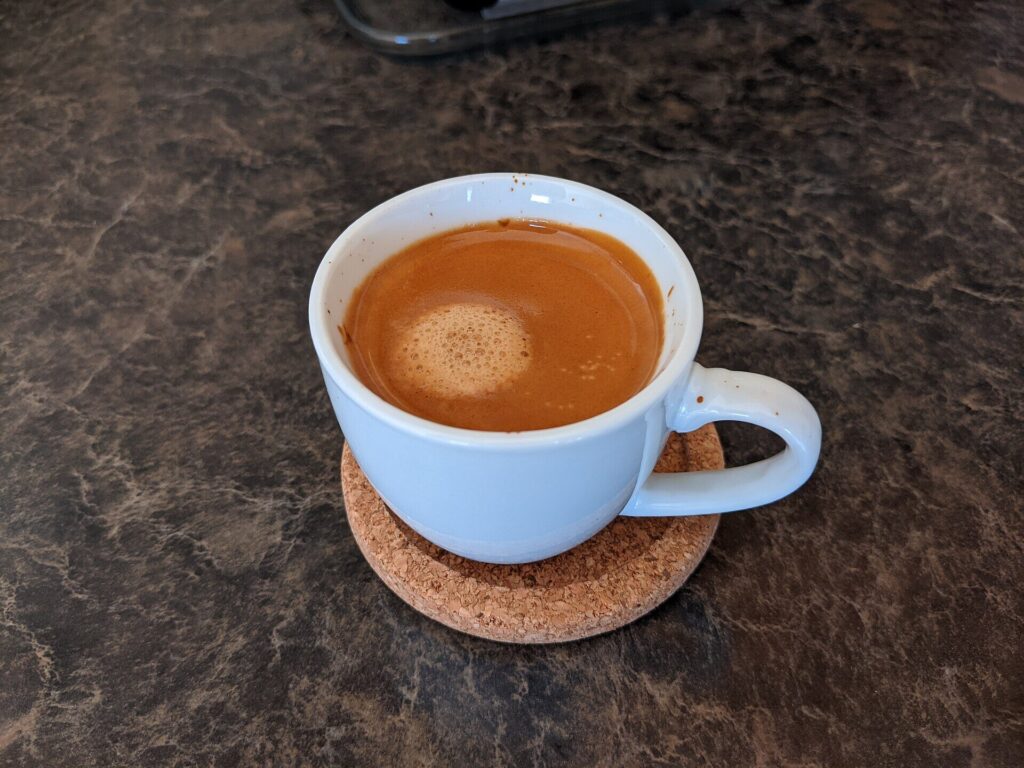
No espresso machine?
A moka pot or an AeroPress can make a concentrated coffee that works well here. Our article on making espresso without a machine covers the options. Aim for a strong, small-volume brew, not a large mug of diluted coffee.
Ingredients and Equipment
For the custard and cream
- 4 large egg yolks
- 100 g / ½ cup granulated sugar
- 500 g / 18 oz (about 2¼ cups) mascarpone, cold
- 200 ml / ¾ cup plus 1 tbsp heavy cream, cold
- 1 tsp vanilla extract (optional)
For assembly
- 300 ml / 1¼ cups strong espresso, cooled to room temperature (about 8 single shots)
- 2 tsp sugar, stirred into the espresso while warm (optional)
- 3 tbsp / 45 ml Marsala, dark rum, or amaretto (optional)
- About 24 to 30 crisp ladyfingers (savoiardi), roughly 200 to 250 g / 7 to 9 oz
- 2 tbsp / 10 g unsweetened cocoa powder for dusting
Equipment: a heatproof bowl, a saucepan, a whisk, a kitchen thermometer, a shallow wide dish for the espresso, a 20 x 25 cm (8 x 10 in) serving dish, and a fine sieve.
Tiramisu Espresso Recipe, Step by Step
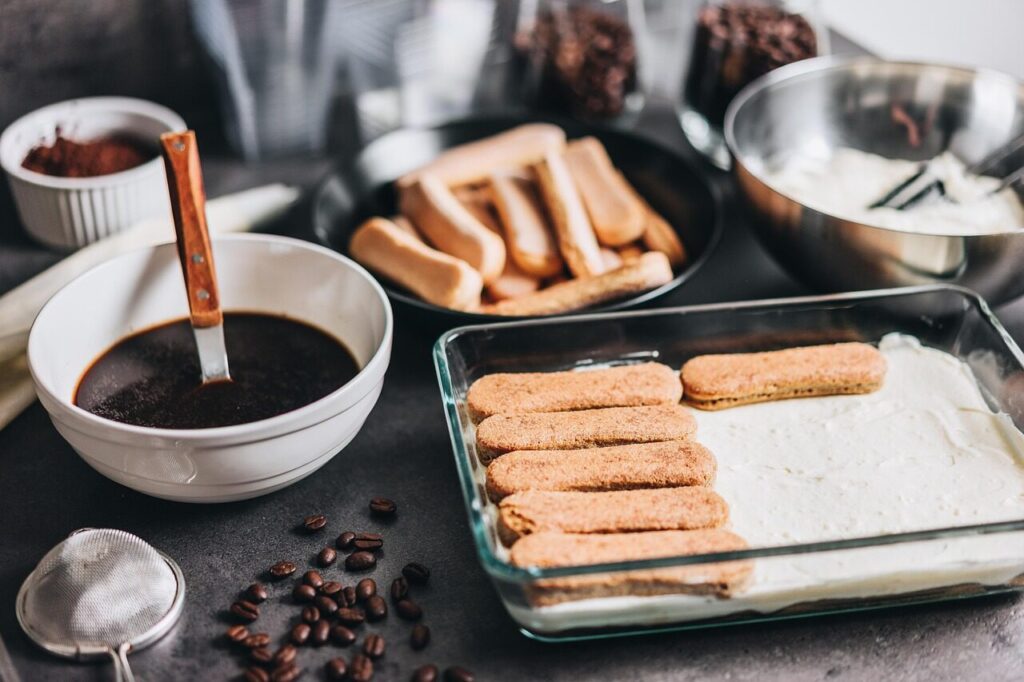
Brew the espresso first so it has time to cool. Hot coffee will melt the cream and collapse the biscuits.
- Brew and cool the espresso. Make 300 ml / 1¼ cups, stir in the optional sugar and alcohol, and pour it into a shallow dish. Let it reach room temperature.
- Cook the yolks. Whisk the yolks and sugar in a heatproof bowl over a saucepan of barely simmering water. The bowl should not touch the water. Keep whisking for 5 to 8 minutes until the mixture is pale, thick, and reaches 71°C / 160°F on a thermometer.
- Cool the custard. Remove the bowl from the heat and whisk for another minute or two. Let it cool to room temperature, stirring now and then. Stir in the vanilla if using.
- Loosen the mascarpone. In a separate bowl, stir the cold mascarpone with a spatula for 20 to 30 seconds, just until smooth. Beating it hard can make it grainy.
- Combine. Fold the cooled custard into the mascarpone in two additions, keeping the mixture smooth.
- Whip the cream. Whip the cold cream to soft-to-medium peaks, which means it holds a shape but still looks glossy. Fold it gently into the mascarpone mixture.
- Dip the ladyfingers. Roll each biscuit in the espresso for about 1 to 2 seconds per side. It should feel damp outside and still slightly firm in the center. Arrange a single layer in the dish, breaking biscuits to fill gaps.
- Layer. Spread half the cream over the biscuits. Add a second layer of dipped ladyfingers, then spread the remaining cream and smooth the top.
- Chill. Cover and refrigerate for at least 6 hours, ideally overnight, so the layers set and the flavors blend.
- Finish. Dust with cocoa through a fine sieve just before serving, so it stays dry and dark.

Fixing Common Tiramisu Problems
Most failures come down to temperature and soaking time. This table covers the usual ones.
| Problem | Likely cause | Fix |
|---|---|---|
| Soggy, collapsing layers | Ladyfingers soaked too long or espresso too diluted | Dip for 1 to 2 seconds and brew a smaller, stronger volume |
| Runny cream | Warm custard or espresso, or underwhipped cream | Cool everything fully and whip the cream to soft-to-medium peaks |
| Grainy or lumpy filling | Mascarpone overmixed or too warm | Stir it briefly while cold and fold in the other parts gently |
| Dry, pale biscuits | Dipped too briefly or espresso too weak | Dip a touch longer or use a stronger brew |
| Bitter aftertaste | Over-extracted or very dark espresso | Adjust the shot, or add the small amount of sugar to the coffee |
Egg, Caffeine, and Alcohol Notes
Many traditional recipes use raw yolks. The cooked custard here avoids that, though it takes a few extra minutes. If you prefer a raw-egg version, pasteurized eggs are the safer choice. People who are pregnant, older adults, young children, and anyone with a weakened immune system should ask a doctor about eggs and soft dairy before serving.
Tiramisu also contains caffeine from the espresso, spread across the whole dish. The amount per portion varies with how strong your coffee is and how many pieces you cut. If you are sensitive to caffeine or pregnant, our article on coffee during pregnancy is a useful starting point, and your doctor can give personal advice. Skipping the alcohol is easy: the dessert works well without it, and decaf espresso is another option.
Make-Ahead and Serving Tips
Tiramisu is better made a day ahead. Keep it covered in the refrigerator and eat it within about two days. Cut it with a sharp knife wiped clean between slices, and serve it cold.
If you want a faster espresso dessert for the same evening, an affogato takes only a few minutes.
Frequently Asked Questions
Can I use regular brewed coffee instead of espresso in tiramisu?
You can, but it must be strong and cooled. Brew it at a much higher coffee-to-water ratio than usual, such as from a moka pot or AeroPress. Standard drip coffee tends to taste thin once the ladyfingers absorb it.
Should tiramisu espresso be hot or cold when dipping?
Cool, ideally room temperature. Hot espresso softens the biscuits too fast and can melt the mascarpone cream, which leads to a soupy dessert. Brew it first and let it sit while you make the custard.
How long should I dip ladyfingers in espresso?
About one to two seconds per side for crisp, dry savoiardi. They keep absorbing liquid in the fridge, so the center should still feel slightly firm when you layer them. Softer sponge-style biscuits need even less time.
Can I make tiramisu without alcohol?
Yes. The alcohol adds depth but is not needed for structure. Leave it out and add a little extra espresso or a pinch of sugar to the coffee. The result is still a classic-tasting tiramisu.
How long does tiramisu keep in the fridge?
Covered, it keeps well for about two days. Texture is best after chilling overnight. After that the biscuits become softer and the cream can weep, so it is better eaten sooner.