

Turkish Coffee vs Espresso: The Short Answer
Turkish coffee is powder-fine coffee simmered in a small pot and poured, grounds and all, into a small cup. Espresso is finely ground coffee that hot water is forced through under pressure, so the grounds stay behind in the basket. One is a slow, gentle immersion brew. The other is a fast, high-pressure extraction.
That single difference explains almost everything else: the grind, the equipment, the texture in your mouth and the way each drink is served. Neither is stronger or better in every way. They are built for different moments.
| Feature | Turkish coffee | Espresso |
|---|---|---|
| Grind | Powder, finer than espresso | Very fine, but still granular |
| Equipment | Small long-handled pot (cezve or ibrik) and a heat source | Espresso machine and a capable grinder |
| How water meets coffee | Coffee and cold water heated together | Hot water pushed through a compressed puck |
| Pressure | None | Around 9 bar (about 130 psi) at the group head |
| Brew time | Two to four minutes of gentle heating | Roughly 25 to 30 seconds |
| Filtering | None; fine grounds settle in the cup | Metal basket only; a clean cup |
| Top layer | Foam, sometimes called kaymak | Crema |
| Typical serving | About 60 to 80 ml (2 to 2.7 fl oz) | About 30 to 60 ml (1 to 2 fl oz) |
Grind Size: Powder Versus Fine
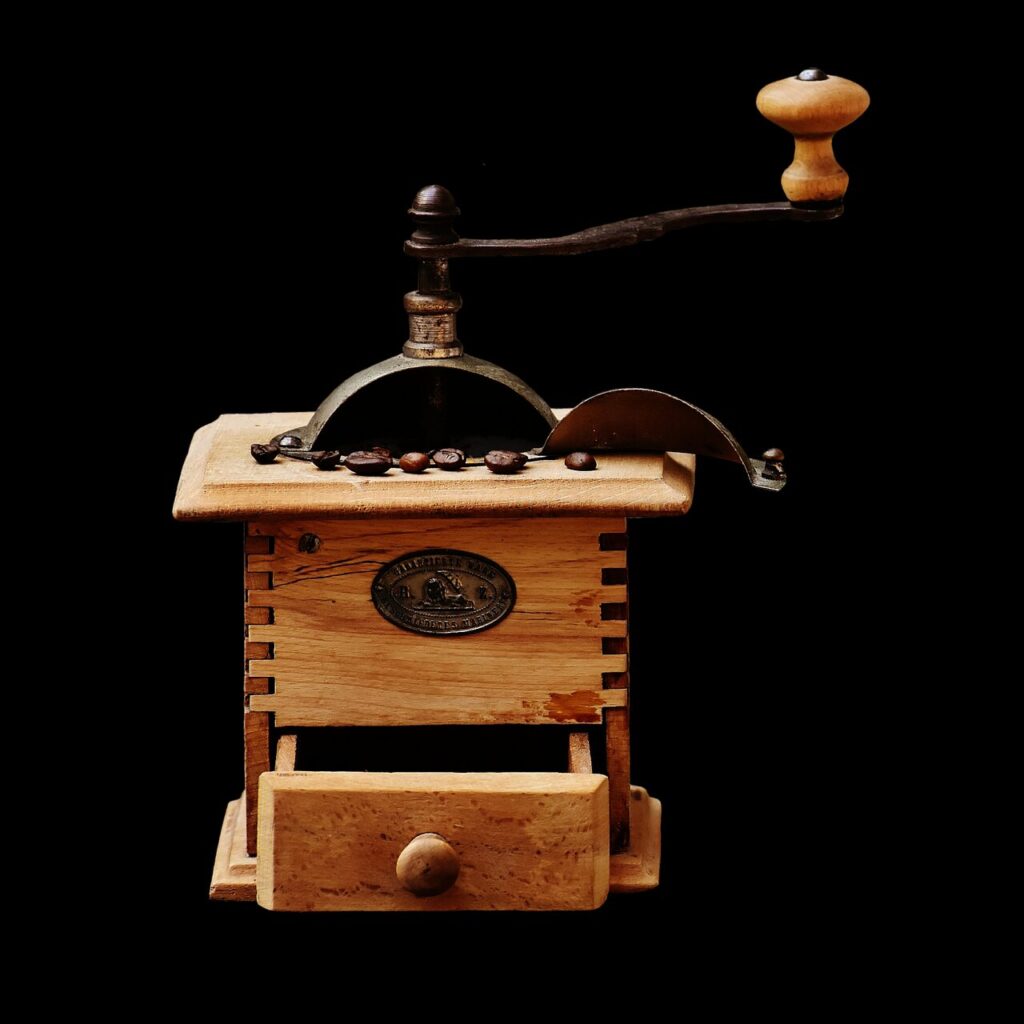
Turkish coffee is the finest grind in regular use. It should feel like flour or cocoa powder between your fingers, with no visible granules. Espresso is also fine, but it looks and feels like very fine sand. If you rub espresso grounds in your palm, you can feel individual particles. Turkish grounds feel smooth and almost silky.
The reasons are practical. In Turkish coffee, the grounds stay in the cup, so they must be small enough to sink and settle. In espresso, the grind has to create the right resistance against the water. Too fine and the shot chokes. Too coarse and it runs through weak and sour. For a visual comparison of every grind level, see our coffee grind size chart.
This is where many home setups run into trouble. A lot of espresso grinders cannot go fine enough for Turkish coffee, and a grinder made for Turkish coffee usually cannot make the small, precise adjustments espresso needs. If you want both, expect to own two grinders or to buy pre-ground Turkish coffee for the days you want a cezve. Grind Turkish coffee fresh when you can, because powder this fine loses its aroma quickly.
Brewing: Gentle Heat Versus Pressure

Turkish coffee starts cold. You stir the coffee, water and sugar (if you take it) in the pot, then heat it slowly. The coffee extracts as the water warms, and a foam builds on the surface. You pull the pot off the heat just as the foam rises, before a full boil. Letting it boil hard turns the cup harsh and flat. Our guide on how to make Turkish coffee covers the steps, and the page on making foamy Turkish coffee explains how to build a thicker foam layer.
Espresso reverses the order. Water is already hot, typically between 90 and 96 °C (194 to 205 °F), and a pump pushes it through a tightly packed bed of coffee. Contact time is under a minute, so the details matter: dose, grind, tamp and yield all shift the result. Our guide to making a good espresso walks through dialing one in.
Because of this difference, the two drinks respond to mistakes differently. A Turkish coffee that is too hot turns bitter. An espresso that runs too fast tastes thin and sour. If you have a bitter cup from either method, the bitter coffee fixes article lists the usual suspects, though that is a separate topic from this comparison.
What Ends Up in the Cup
Espresso passes through a metal basket that holds back the grounds. You get a concentrated, syrupy liquid with a layer of crema on top. Crema is made of tiny gas bubbles and coffee oils, formed under pressure. It fades within a minute or two.
Turkish coffee has no filter step at all. The cup contains very fine sediment, which settles to the bottom in a minute or two. The foam on top forms from the fine particles and gentle heating, and it is considered a sign of a well-made cup. Because the grounds sit in the liquid, the texture is heavier and slightly velvety. Stop before you reach the sludge at the bottom, which is the traditional rule.
The cup size is part of the character, too. Turkish coffee is served in a small cup, usually with a glass of water on the side. For ideas on how it is traditionally served, see Turkish coffee presentation.
Taste: Heavy and Aromatic Versus Concentrated and Defined
Turkish coffee tastes dense, round and aromatic. The fine powder gives it body you can feel on your tongue, and flavors tend to blend together rather than separate. Sugar, cardamom or other additions (common in some regions) sit comfortably in that fullness. Because the grounds keep steeping while you sip, the cup also changes as it cools.
Espresso tastes more structured. You can usually pick out a clear acidity, a sweet middle and a bittersweet finish, and the texture is smoother and cleaner. Brightness stands out more in an espresso, which is why lighter roasts show their fruit and floral notes better in this format.
Roast level does matter, but it does not divide the two neatly. Both drinks are made from many roast levels. Turkish coffee is often made from medium roasts, and espresso blends commonly run from medium to dark, though specialty shops also pull lighter roasts. If you are curious how roast changes the cup, our roast levels guide explains it, and the existing espresso vs coffee article compares espresso with regular brewed coffee.
Caffeine and Health Notes
People often assume espresso is stronger. Per milliliter, a shot is concentrated. Per serving, the numbers depend on the dose, the beans, the grind and the cup size, so there is no single answer that fits every café or kitchen. A Turkish coffee and a single espresso are in a similar range in many cases, but you should not rely on that as a rule. Our caffeine per cup guide gives a fuller picture.
One difference is worth knowing. Research suggests that unfiltered coffee contains more of certain oily compounds that may raise LDL cholesterol than paper-filtered coffee does. Turkish coffee is unfiltered, and espresso is only partly filtered by its metal basket. The effect depends on how much you drink. If you drink several cups a day, have high cholesterol or high blood pressure, are pregnant, take medication, or are sensitive to caffeine, ask your doctor what amount suits you.
Taste Them Side by Side at Home
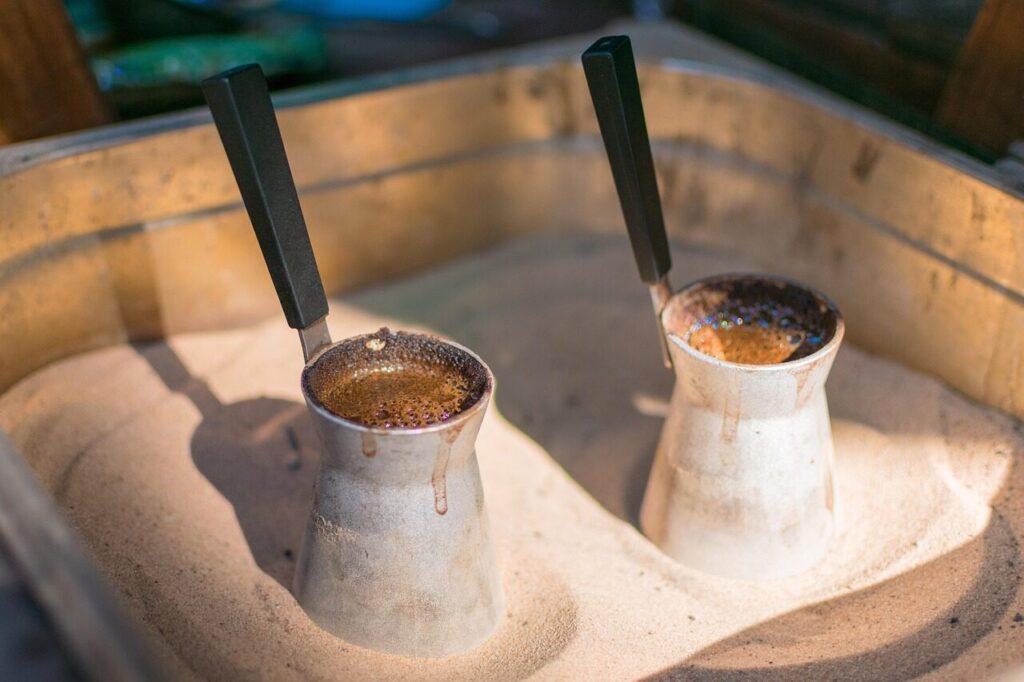
The clearest way to understand the difference is to brew both from the same beans on the same day. Pick a medium roast you already like. You will need:
- A cezve (Turkish coffee pot) and a stove or small burner
- An espresso machine, or an alternative such as a moka pot if you do not have one
- A grinder that can reach powder fineness, or pre-ground Turkish coffee
- A kitchen scale and two small cups
- Grind about 7 g (roughly 1 heaped teaspoon) of coffee to a powder for the Turkish cup. Grind a second portion of 18 g (about 0.6 oz) to espresso fineness.
- Pour 70 ml (about 2.4 fl oz) of cold water into the cezve, stir in the powder, and heat on low. Take it off the heat as the foam rises, before it boils, and pour gently so the foam lands in the cup.
- Pull the espresso using water at 90 to 96 °C (194 to 205 °F), aiming for about 36 g (1.3 oz) in the cup in roughly 25 to 30 seconds. Adjust the grind if it runs much faster or slower.
- Let each cup rest for about a minute. Smell first, then sip. Note the texture before the flavor, because body is where the two drinks differ most.
- Sip again after a few minutes. The Turkish cup will have changed more as it cools and settles.
If you do not own an espresso machine, making espresso without a machine offers workable alternatives, though the result is not identical to a true shot.
Choosing Between Them
Pick Turkish coffee when you want a slow cup and some ritual: a pot, a small flame, a few minutes of attention and then a drink you sip over a conversation. It needs very little equipment beyond a good grinder or pre-ground powder, which makes it an affordable way into serious coffee.
Pick espresso when you want a quick, concentrated drink, or a base for milk drinks such as lattes and cappuccinos. It rewards the precision of a good machine and a good grinder, and it is the format that best shows off a coffee’s acidity and sweetness.
If you only have room for one setup, think about how you actually drink coffee. For one small cup at a table, the cezve is simple and satisfying. For several drinks in a morning, with or without milk, an espresso machine is more flexible. Many people end up with both and use each for what it does best.
Frequently Asked Questions
Is Turkish coffee stronger than espresso?
Not necessarily. Espresso is more concentrated per milliliter, but Turkish coffee is served in a slightly larger cup, so caffeine per serving ends up in a similar range. It varies with the beans, dose and cup size. Taste and texture feel stronger in Turkish coffee because of the sediment.
Can I use an espresso machine to make Turkish coffee?
No. Turkish coffee relies on simmering powder-fine coffee with water in a cezve, and the grounds stay in the cup. An espresso machine forces water through a puck and filters out the grounds, so the result is a different drink, even with the same beans.
Can I use espresso beans for Turkish coffee?
Yes, as long as you grind them to a powder. Beans are not labeled by method in any strict way, so a medium roast espresso blend can work well. Very dark, oily roasts may taste heavier and more bitter in a cezve, so try a medium roast first.
Why does Turkish coffee have grounds at the bottom?
The coffee is not filtered. The powder-fine grounds are brewed together with the water and poured into the cup, where they settle after a minute or two. Traditionally you sip slowly and leave the sediment in the cup.
Is the foam on Turkish coffee the same as crema?
No. Crema forms when pressurized water pushes gas and oils out of fresh coffee in an espresso machine. Turkish coffee foam forms from fine particles and gentle heating in the pot. Both sit on top, but they form differently and have a different texture.