

The rule behind any coffee grind size chart is simple: the shorter the water touches the coffee, the finer you grind. Turkish coffee and espresso sit at the fine end, drip and pour over in the middle, and French press and cold brew at the coarse end.
The chart below gives you a starting point for each method. After it, we cover what each grind looks like, how to adjust by taste, and why the numbers on your grinder won’t match anyone else’s.
Coffee Grind Size Chart by Brewing Method
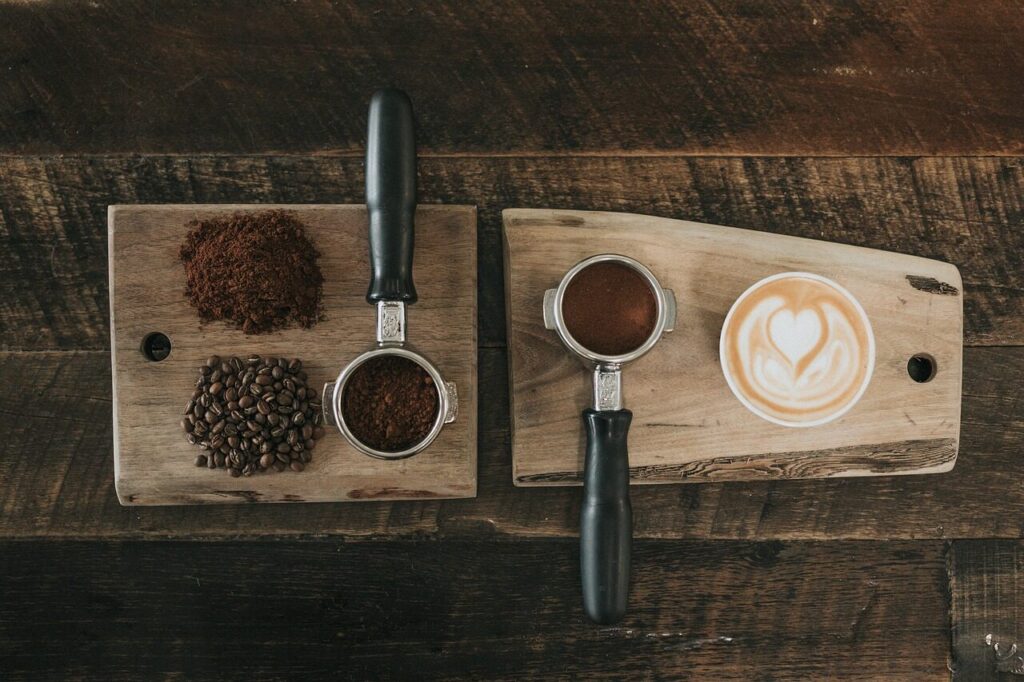
Use the texture comparisons as a visual guide. Contact times are typical ranges, not strict rules, and your beans and grinder will shift them a little.
| Grind level | Looks and feels like | Brewing methods | Typical contact time |
|---|---|---|---|
| Extra fine | Flour or powdered sugar | Turkish coffee (cezve) | A few minutes on heat, then settling |
| Fine | Fine sand, slightly gritty | Espresso machine | Roughly 25–30 seconds |
| Medium-fine | Sand to table salt | Moka pot, AeroPress, V60 | 1–4 minutes, depending on method |
| Medium | Regular beach sand | Electric drip machine, flat-bottom filter brewers, siphon | 4–6 minutes |
| Medium-coarse | Coarse sand or sea salt | Chemex, other thick-filter brewers | 4–5 minutes |
| Coarse | Kosher salt or breadcrumbs | French press, cupping | About 4 minutes |
| Extra coarse | Cracked peppercorns | Cold brew | 12–18 hours |
Treat each row as a range. A V60 and an AeroPress both live in medium-fine, yet the V60 usually lands a touch coarser or finer depending on your pour speed and recipe.
Why Grind Size Changes How Coffee Tastes
Water pulls flavor out of coffee in a rough order: acids and fruity notes first, sweetness next, then the heavier, bitter compounds. Finer grounds have more surface area, so water extracts faster. Coarser grounds slow everything down.
That is why contact time and grind size travel together. A fine grind in a four-minute French press over-extracts and tastes harsh. A coarse grind in a 30-second espresso shot under-extracts and tastes sour and thin.
Grind size also controls flow. In espresso and pour over, finer grounds slow the water down and coarser ones let it rush through, so the grind changes the brew time as well as the extraction.
From Finest to Coarsest: What Each Grind Needs
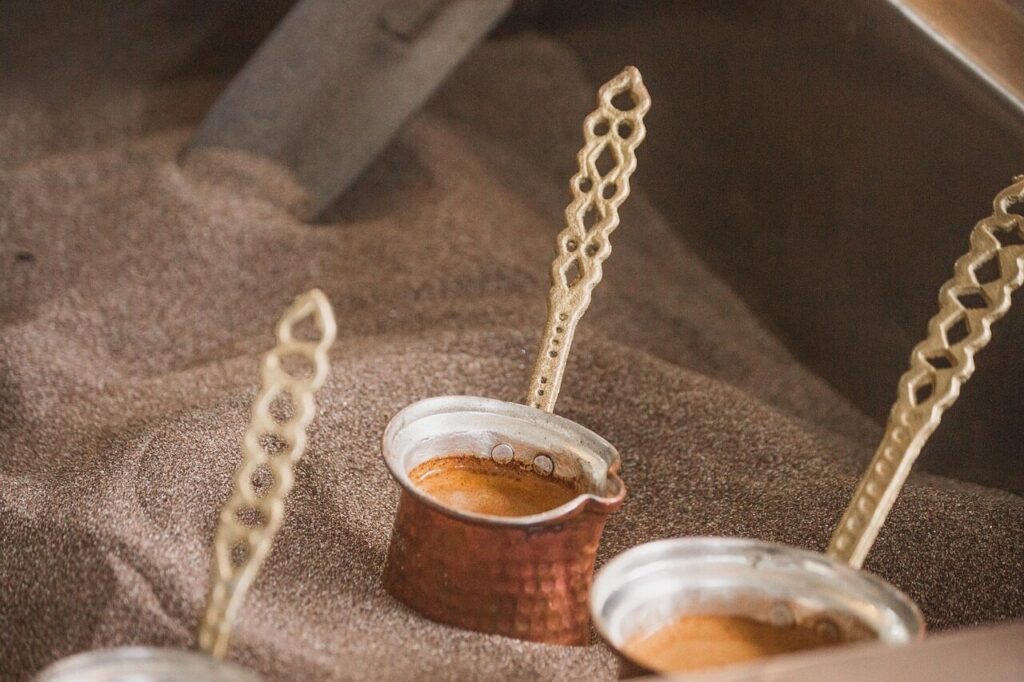
Turkish coffee: finer than espresso
Turkish coffee is ground to a powder because the grounds stay in the cup. Nothing gets filtered out, so the fine particles dissolve into the liquid and give it body and foam. Many home burr grinders can’t reach this fineness, so look for a grinder made for it, or buy it ground for Turkish coffee. Our guide on how to make Turkish coffee covers the brewing itself.
Espresso: fine, and precise
Espresso has the least forgiving grind of all. A small shift changes the shot time noticeably, which is why espresso grinders adjust in tiny steps. If you’re working on shots, our guide on how to make a good espresso shows how dose, time, and grind work together.
Moka pot and AeroPress: medium-fine, with room to move
A moka pot wants a grind a little coarser than espresso. Fill the basket level without tamping, so the steam pressure can push water through evenly. The AeroPress is flexible: a finer grind suits short brews and a coarser grind suits longer steeps.
V60 and drip: medium-fine to medium
A V60 sits at medium-fine, since the cone drains quickly and needs enough resistance to extract fully. An automatic drip machine works best a notch coarser, because its showerhead keeps water in contact with the bed for several minutes. A thicker filter like the Chemex’s slows drainage, so go medium-coarse to keep it from stalling.
French press and cold brew: coarse to extra coarse
In full immersion the grounds sit in water the whole time, so a coarse grind keeps the cup from turning bitter and muddy. A metal mesh also lets fine particles through, and a coarse grind gives you fewer of them. For cold brew, go even coarser, since the steep lasts many hours in the fridge or at room temperature. Our cold brew concentrate recipe has the full method.
How to Dial In Your Grind by Taste
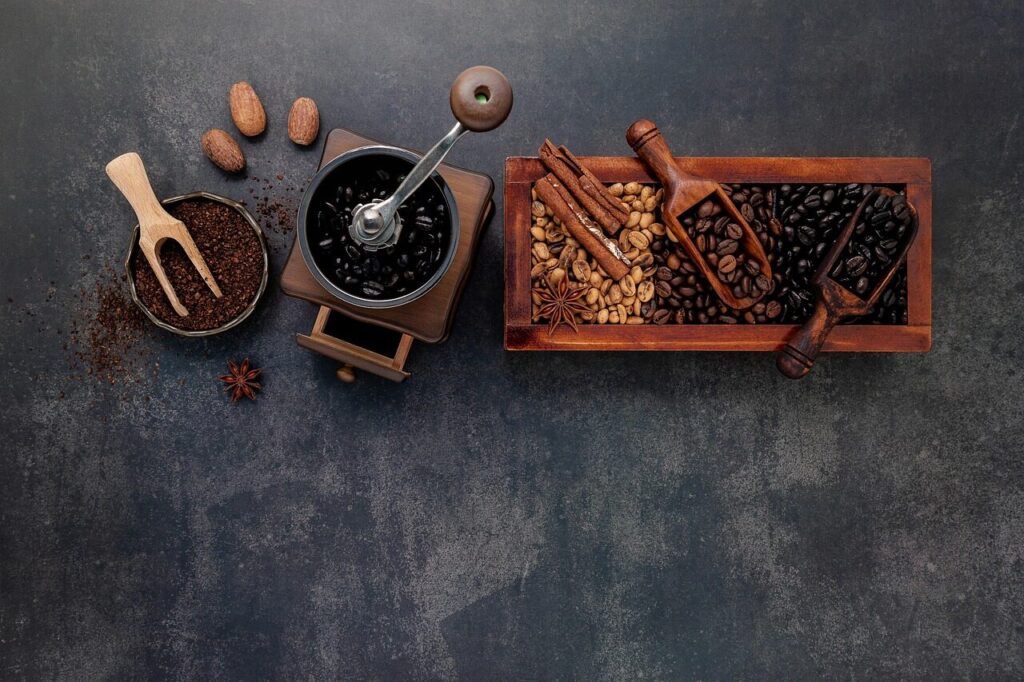
The chart gets you close. Your palate gets you the rest. Brew a test cup, taste it, and change only the grind, one step at a time.
- Start with a medium-fine test: 20 g of coffee (about 4 level tbsp) and 320 ml of water (about 11 fl oz) at 92–96 °C (198–205 °F).
- Brew with your usual method and keep the pour pattern and timing consistent.
- Taste the cup once it has cooled slightly, and compare it against the table below.
- Move your grinder one step finer or coarser, then brew the same recipe again.
- Stop when the cup tastes balanced: sweet, with some acidity and no lingering harshness.
| What you taste | What it suggests | Adjust |
|---|---|---|
| Sharp, sour, salty, or thin | Under-extraction | Grind finer |
| Bitter, dry, or ashy | Over-extraction | Grind coarser |
| Flat and dull, neither sour nor bitter | Often a stale-bean or ratio problem | Check bean freshness and dose before touching the grind |
| Bitter and sour in the same cup | Uneven grind | Look at grinder quality and consistency |
If the grind looks right but the cup is still off, the ratio may be the culprit. Our coffee to water ratio chart gives a starting dose for each method.
Why Your Grinder’s Numbers Won’t Match a Chart
Grinder dials are not standardized. Setting 15 on one model can be much finer than 15 on another, and even two grinders of the same model can differ slightly. Use the numbers on your own grinder as personal notes, not as universal values.
Grinder type matters more than the dial. Burr grinders crush beans between two surfaces and produce a fairly even grind. Blade grinders chop beans unevenly, leaving both powder and boulders in the same batch, which is why such cups often taste bitter and sour at once. Our grinding coffee beans guide covers grinder types and how to use them.
Roast and freshness also move the target. Lighter roasts are denser and often need a finer grind to extract well, while darker roasts are more brittle and extract faster. Beans that have been open for weeks tend to need a slightly finer grind than fresh ones.
Keep a Simple Grind Log
Write down your grinder setting, dose, water amount, and a one-word taste note each time you change beans. After a few bags you’ll know where each method sits on your grinder and can start from there. Changing beans usually means shifting by a click or two, not starting over.
Frequently Asked Questions
Can I use one grind size for every brewing method?
Not well. A single medium grind will under-extract espresso and Turkish coffee, and over-extract French press or cold brew if the contact time is long. If you only have one grinder setting, choose a method that suits it, such as drip.
What grind size is best for an automatic drip machine?
Medium, similar to regular sand, works for most machines. If the cup tastes bitter, go slightly coarser. If it tastes sour or weak, go slightly finer. Flat-bottom baskets and cone baskets can differ a little, so adjust by taste.
Is pre-ground coffee a problem for grind size?
Pre-ground coffee is convenient, but you can’t adjust it, and it goes stale faster once ground. If you buy it, choose a bag labeled for your method, such as espresso, drip, or Turkish, and use it within a few weeks.
Why does my coffee taste bitter even at a coarse setting?
Check water temperature, brew time, and dose. Water that’s too hot, a long steep, or too much coffee can all cause bitterness. An uneven grind from a blade grinder or worn burrs can also produce it.