

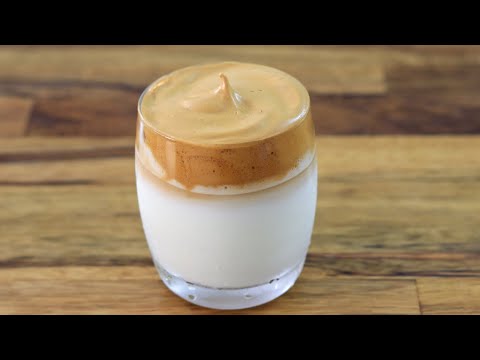
Dalgona coffee is instant coffee, sugar and hot water whipped into a thick, glossy, light brown foam and spooned over milk. The ratio is equal parts of all three, and the one rule is that you must use instant coffee. Fresh grounds and espresso will not whip into foam this way.
The drink is named after dalgona, a Korean honeycomb toffee with a similar color and sweetness. It spread widely through social video in early 2020, but the technique is older than the trend. Greek frappé relies on the same idea of beating instant coffee with sugar and a little water.
How to Make Dalgona Coffee

You need three ingredients for the foam and a glass of milk. Everything else is equipment you probably own.
Ingredients (1 serving)
- 2 tbsp (about 12 g) instant coffee granules or powder
- 2 tbsp (25 g) granulated sugar
- 2 tbsp (30 ml) hot water, just off the boil, about 90–95°C / 195–203°F
- 1 cup (240 ml) cold milk, plus ice if you like
Equipment
- A small, deep bowl or large measuring jug
- A hand whisk, a handheld electric mixer or a milk frother wand
- A tall glass
Steps
- Put the instant coffee and sugar in the bowl and add the hot water.
- Start whisking right away. The mixture will look like dark syrup at first.
- Keep going until it lightens to a pale caramel color and holds a soft peak when you lift the whisk. Use the timings in the table below.
- Fill the glass with cold milk and ice, leaving room at the top.
- Spoon the foam over the milk. Stir it in as you drink so the coffee flavor spreads through the milk.
| Tool | Approximate whisking time | Notes |
|---|---|---|
| Handheld electric mixer | 1–3 minutes | Fastest and most consistent |
| Milk frother wand | 2–4 minutes | Use a narrow, deep container so the foam doesn’t splash |
| Hand whisk | 5–10 minutes | Works fine, but it is a workout for your arm |
Why It Has to Be Instant Coffee
Instant coffee is brewed coffee that has been dried into soluble granules. It dissolves completely in a small amount of hot water, which gives you a very concentrated, slightly syrupy liquid. When you beat air into that syrup, the dissolved sugar and coffee solids help hold the bubbles in place.
Ground coffee does not dissolve, and espresso is too thin and contains far less dissolved material per spoonful. Neither will build stiff foam. If you want a rich espresso-based drink instead, our guide to making an iced latte at home is the better route.
Sugar matters too. It thickens the syrup and stabilizes the foam. Cutting the sugar a little usually still works, but sugar-free sweeteners often give a looser result. If you try one, expect to whisk longer and accept a softer foam.
Fixing Dalgona Coffee That Won’t Whip
Most failures come down to the ratio, the water or the bowl. This table covers the usual suspects.
| Problem | Likely cause | Fix |
|---|---|---|
| Foam stays runny | Too much water or too little sugar | Add a teaspoon each of coffee and sugar and keep whisking |
| Granules won’t dissolve | Water not hot enough | Use water just off the boil and stir briefly before whisking |
| Foam is stiff but bitter | Strong or dark-roasted instant coffee | Stir more of the foam into the milk, or add a little more sugar next time |
| Foam sinks into the milk | Milk is too thin or the foam is under-whipped | Whisk until it holds a peak, and pour the milk first and gently |
| Foam splashes everywhere | Bowl is too wide or shallow | Switch to a deeper, narrower container |
If the result tastes harsh in general, our article on why coffee tastes bitter explains how roast level and strength affect the cup. With instant coffee, the brand and roast you choose make the biggest difference.
Serving Dalgona Coffee Hot or Iced
The classic version is iced: cold milk, a few ice cubes, foam on top. It looks best in a clear glass, and the foam holds longest when the milk is cold.
For a hot version, heat the milk to about 60–65°C / 140–150°F and pour it into a mug before adding the foam. The foam softens and melts in faster, so it works more like a sweet coffee topping than a distinct layer. If you want properly textured hot milk underneath, see our guides to steaming milk for a latte or frothing milk without a frother.
Milk choice changes the drink more than you might expect. Whole milk gives the creamiest base, while oat and soy milks tend to hold up well against the sweet, strong foam. Our comparison of dairy and plant milks for coffee goes into the differences.
Simple Variations
Once you have the base foam, small additions are easy. Add them before whisking so they are fully incorporated.
- Chocolate: 1 tsp (2 g) unsweetened cocoa powder with the coffee and sugar.
- Vanilla: a few drops of vanilla extract in the hot water.
- Cinnamon: a small pinch stirred in, or dusted over the finished foam.
- Brown sugar: swap it for white sugar for a deeper, caramel-like flavor. The foam may be slightly softer.
- Dessert style: spoon the foam over vanilla ice cream or plain yogurt instead of milk.
The same instant-coffee foam idea is behind Greek frappé, which is shaken rather than whipped and served over ice. If that sounds appealing, try our recipe for how to make a frappé.
Caffeine and Sugar: What to Keep in Mind
A serving made with 2 tbsp of instant coffee contains a real dose of caffeine, though the exact amount varies by brand and how densely the granules pack. Instant coffee generally contains somewhat less caffeine per gram than people expect, but a heaped spoon adds up. Our article on how much caffeine is in a cup of coffee gives context for comparing it with your usual brew.
The foam also uses about 2 tbsp of sugar. Research suggests keeping added sugar moderate, so you can trim it slightly or make a smaller portion. If you are sensitive to caffeine, pregnant, take medication or have blood pressure concerns, ask your doctor how much coffee suits you.
Prep Ahead and Troubleshoot Quickly
You can whip a double batch and keep the foam covered in the fridge for a few hours. It will loosen as it sits, so give it a quick re-whisk before using it. For the best texture, though, make it fresh. It takes only a few minutes, and a freshly beaten foam sits on the milk in a thick, clean layer.
Frequently Asked Questions
Can I make dalgona coffee with regular ground coffee or espresso?
No. Ground coffee doesn’t dissolve, and espresso is too thin to hold air. The foam depends on instant coffee, which dissolves into a concentrated syrup that traps bubbles when it is whisked with sugar.
Why is my dalgona coffee not getting thick?
Usually the ratio is off or the water is too cool. Keep equal parts instant coffee, sugar and hot water, use water just off the boil, and whisk in a deep bowl until it holds a soft peak.
Can I use less sugar in dalgona coffee?
You can reduce it a little, but the foam will be looser and less stable because sugar helps thicken and hold the structure. Sugar substitutes often whip even less well, so expect a softer result.
Is dalgona coffee served hot or cold?
The classic version is served cold, over iced milk. You can also spoon the foam over hot milk, but it melts in faster and gives less of a distinct layer on top.
How long does whipped dalgona foam last?
Covered in the fridge, the foam keeps for a few hours but gradually loosens. A quick re-whisk usually revives it. It looks and tastes best when made fresh just before serving.