

A good v60 pour over comes down to a simple formula: 15 g of medium-fine ground coffee, 250 g of water at about 95°C (203°F), poured in stages over roughly three minutes. That gives you one clean, bright mug of coffee with a lot of clarity in the flavor.
The V60 is forgiving about equipment but not about technique. The cone shape and large single hole let water run through quickly, so grind size, pour speed and timing all show up in the cup. This guide gives you a reliable starting recipe and a way to adjust it when the result is not quite right.
What You Need for a V60 Pour Over
The V60 is a cone-shaped dripper with a 60-degree angle, spiral ribs on the inside wall and one large hole at the bottom. That design pushes you to control the flow yourself rather than letting the dripper slow things down. Here is the full kit:
- A V60 dripper, size 01 for one or two cups or size 02 for up to about four
- Cone-shaped paper filters that match the dripper size
- A burr grinder, or freshly ground coffee from a shop
- A digital scale that reads in 0.1 g or 1 g steps
- A kettle, ideally a gooseneck for a thin, steady stream
- A timer (your phone works)
- A mug or glass server to brew into
A scale matters more than any other accessory. Scoops and tablespoons vary with grind size and roast, so weighing both coffee and water is what makes a recipe repeatable. If you only have spoons, 15 g is roughly 2½ level tablespoons of ground coffee, but treat that as an estimate.
Ratio, Water and Temperature
Start with a ratio of about 1:16.7, which means 15 g of coffee to 250 g (about 8.5 fl oz) of water. That makes a balanced mug with a little room to go stronger or lighter. A range from 1:15 to 1:17 covers most tastes.
For water temperature, use 94–96°C (201–205°F) for light and medium roasts. Darker roasts extract easily and can turn bitter, so 90–93°C (194–199°F) suits them better. Boil the kettle, then let it rest for 30 to 60 seconds to land in the right range.
Water matters too, because it makes up almost all of your cup. If your tap water tastes of chlorine or is very hard, filtered water usually gives a cleaner result.
Grind Size and Bean Choice
Aim for a medium-fine grind, a little finer than you would use for a flat-bottom drip machine and noticeably coarser than espresso. It should feel like fine sand with some grittiness, similar to table salt or slightly larger. If you want a refresher on burrs, consistency and settings, see our guide to grinding coffee beans.
Grind just before brewing. Ground coffee loses aroma quickly, and a V60 is so transparent that stale coffee tastes flat and papery.
The V60 tends to highlight acidity, floral notes and fruit, so lightly to medium roasted beans from washed-process lots are a natural fit. Single-origin coffees from East Africa are a classic choice, and our page on Ethiopian coffee explains why they suit filter brewing. If you are still deciding what to buy, how to choose coffee beans covers roast dates, origin labels and storage.
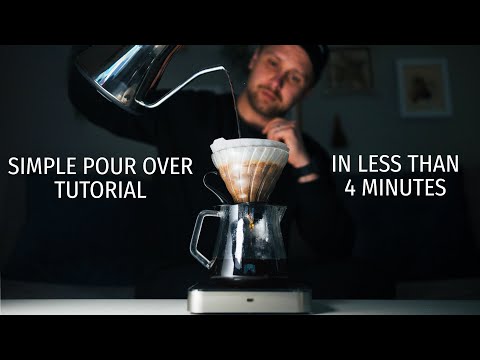
V60 Pour Over Recipe, Step by Step
This recipe makes one mug of about 230 ml (8 fl oz) of finished coffee, since the grounds absorb some of the water. Times are targets, not strict rules.
- Heat your water to the temperature above. Fold the paper filter along its seam and place it in the dripper, then set the dripper on your mug or server.
- Rinse the filter with hot water until the dripper is thoroughly wet. This removes paper taste and warms the brewer. Discard the rinse water from the mug.
- Add 15 g of medium-fine ground coffee. Give the dripper a gentle shake so the bed is level, then place everything on the scale and zero it.
- Start the timer and pour 40 g of water, wetting all the grounds evenly. This is the bloom. Coffee releases carbon dioxide at this stage, and the bed will puff up. Let it sit for 35 to 45 seconds.
- At about 0:45, pour slowly in small circles from the center outward, keeping the stream low and gentle. Aim to reach 150 g by around 1:15.
- Pause briefly, then pour up to 250 g total by roughly 1:50. Try to keep the water level in the cone fairly steady rather than flooding it.
- Give the dripper one gentle swirl to flatten the bed so the grounds drain evenly.
- Let the coffee draw down. It should finish dripping between 2:45 and 3:15. Remove the dripper, give the mug a quick stir, and let it cool slightly before tasting.
Pouring close to the surface of the bed disturbs the grounds less than pouring from high up. A thin stream also gives you finer control, which is the main reason a gooseneck kettle helps.
Scaling the recipe for a bigger mug
For a larger serving, keep the ratio and scale everything up. The table below shows common strengths for a 300 g pour. Keep the bloom at about twice to three times the coffee weight and spread the rest of the pours evenly.
| Ratio | Coffee | Water | Cup character |
|---|---|---|---|
| 1:17 | 17.5 g | 300 g | Lighter, tea-like, high clarity |
| 1:16 | 19 g | 300 g | Balanced, a good default |
| 1:15 | 20 g | 300 g | Fuller body, more intensity |
A larger dose slows the draw-down, so you may need a slightly coarser grind to stay inside the time window.
Fixing Sour, Bitter and Weak Cups
Taste is the best guide. Change one variable at a time, and the cup will tell you which way to go. Grind size is usually the first thing to adjust, because it affects both extraction and total brew time.
| What you taste | Likely cause | What to change |
|---|---|---|
| Sharp, sour, thin | Under-extraction | Grind finer, or raise water temperature slightly |
| Bitter, dry, harsh | Over-extraction | Grind coarser, or lower water temperature |
| Pleasant but weak | Ratio too lean | Use more coffee or less water |
| Water drains in under 2 minutes | Grind too coarse | Grind finer |
| Draw-down passes 4 minutes | Grind too fine or bed clogged | Grind coarser and pour more gently |
If the coffee tastes bitter and the draw-down is also slow, the cause is usually fine particles settling at the bottom of the filter. A more even grind or a gentler pour can help more than a temperature change.
How the V60 Differs From Other Filter Brewers
Compared with a flat-bottom dripper or an automatic machine, the V60 gives you more control and a more delicate cup. The cone concentrates the coffee in one deep bed and the single hole drains quickly, so your pouring directly shapes the flavor. Our overview of how to make filter coffee covers the broader category if you want to compare approaches.
The Chemex also uses a cone, but its thicker paper filter slows the flow and tends to produce an even cleaner cup. We cover that method in what the Chemex brewing method is.
The filter itself plays a part in flavor as well. Paper traps oils and fine particles, which is a big reason V60 coffee tastes so clean. For more on how filters differ, read about using paper filters for filter coffee.
Building a Routine That Lasts
Pick one bag of coffee and brew it the same way several mornings in a row, changing only the grind. Write down the dose, the water, the time and a few words about the taste. Within a week or so you will know what your own kitchen setup needs.
Once you have a recipe you like, small habits keep it consistent: weigh everything, use the same kettle temperature, and rinse the filter every time. The V60 rewards that kind of steadiness more than any special pouring pattern.
Frequently Asked Questions
Which V60 size should I buy?
The size 01 suits one or two small cups, and the size 02 handles up to about four cups, so it is the more flexible choice for households. A size 03 exists for larger batches. Filters are sized to match, so buy the right ones.
Do I need a gooseneck kettle for a V60 pour over?
You can brew without one, but a gooseneck gives a thin, controllable stream that makes an even pour much easier. With a regular kettle, pour slowly and in small amounts, and expect a little more trial and error with timing.
Can I use pre-ground coffee in a V60?
Yes, but results depend on the grind. Pre-ground coffee is often sized for automatic drip machines, so it may be coarser than ideal and drain too fast. If you buy it from a roaster, ask for a medium-fine grind for a cone dripper.
Can I make iced coffee with a V60?
Yes. Put ice in the server and brew directly over it, using about 60 percent of your normal water so the melting ice makes up the rest. Use the same coffee dose as usual, and the result will be stronger, not diluted.
Does the dripper material change the coffee?
The main difference is heat retention. Ceramic and glass hold heat better than plastic, but all versions work well if you rinse and preheat them first. Grind, ratio and pouring matter far more than the material.