

An iced latte is a shot or two of espresso poured over cold milk and ice. That is the whole drink. The skill is in the proportions and the order, because a badly built one turns thin and watery within minutes.
The ratio we recommend is about 1 part espresso to 4 parts milk, served over plenty of ice. Below you will find exact quantities, a no-machine alternative, and a short list of fixes for the most common problems.
What an Iced Latte Is (and Is Not)
A hot cafe latte relies on steamed, slightly sweet milk with a thin layer of foam. Iced versions skip the steaming, so the milk tastes fresher and a little less sweet. The espresso has to carry more of the flavor.
It is also not an iced Americano, which is espresso and water with no milk, and not a frappe, which is shaken or blended into foam. If you want that style, see our guide on how to make a frappe. An iced latte should stay smooth, milky and sippable, with the coffee still clearly present.
Ingredients and Equipment
This makes one 350 ml (12 oz) drink.
- Espresso: a double shot of about 36 g (1.3 oz) liquid, made from about 18 g (0.6 oz) ground coffee
- Cold milk: 150 ml (⅔ cup), straight from the fridge at around 4°C (39°F)
- Ice: about 150 g (1 cup) of cubes, preferably large and dense
- Sweetener (optional): 1 to 2 tsp (5 to 10 ml) simple syrup, or 1 tsp sugar dissolved in the hot espresso
- Equipment: a 350 ml (12 oz) glass, a small pitcher or cup for the espresso, a long spoon, and a scale if you have one
The coffee matters more than usual here, because cold and milk both mute flavor. Medium or medium-dark roasts with notes of chocolate, nuts or caramel tend to hold up best. Our guide on how to choose coffee beans explains how to read a bag.
The Classic Iced Latte Recipe

Pull the espresso last, so it goes onto the milk while it is still fresh and aromatic. If your shots are inconsistent, our espresso guide covers dose, yield and timing.
- Chill the glass in the freezer for 10 minutes if you have time. It is a small step that slows melting.
- Grind 18 g (0.6 oz) of coffee fine, as you would for any espresso. Heat your machine so the water is around 93°C (200°F) at the group head.
- If you are sweetening with sugar, put it in your small pitcher now. If you are using syrup, add it to the glass instead.
- Fill the glass to the top with ice. Pour in 150 ml (⅔ cup) of cold milk.
- Pull a double shot, aiming for about 36 g (1.3 oz) of liquid in 25 to 30 seconds, directly into the pitcher.
- Pour the hot espresso slowly over the ice and milk. The coffee will drift down through the milk and make a layered look.
- Stir gently for a few seconds and taste. Add more syrup or a splash more milk if you want it softer.
Pouring the hot shot over the ice is fine. The espresso cools quickly on contact, and you lose very little flavor if you drink it soon after.
No Espresso Machine? Use a Concentrated Base
You do not need a machine to make a good iced latte. You need a coffee that is stronger than normal, because milk and ice dilute it. Anything that tastes bold and concentrated on its own will work.
Our article on making espresso without a machine covers the stovetop and manual options in detail. Cold brew is another strong choice, and our cold brew guide explains how the brewing tool affects the result. The table below compares the main bases.
| Coffee base | Amount per drink | Notes |
|---|---|---|
| Espresso machine | 36 g (1.3 oz) double shot | Most body and crema. Pour it hot over the milk and ice. |
| Moka pot | 60 to 80 ml (2 to 2.7 fl oz) brewed coffee | Strong and slightly bitter, so a little syrup helps. Cool it for a minute before pouring. |
| AeroPress (concentrated) | 60 to 80 ml (2 to 2.7 fl oz) brewed coffee | Use a higher coffee-to-water ratio than usual so it is not thin. |
| Cold brew concentrate | 60 ml (¼ cup), then adjust | Smooth and low in bitterness. Already cold, so there is less melting. |
Do not use regular drip coffee at its normal strength. It will taste like milky water once the ice melts. If it is all you have, brew it at roughly double strength and chill it first.
How to Keep an Iced Latte From Tasting Watery
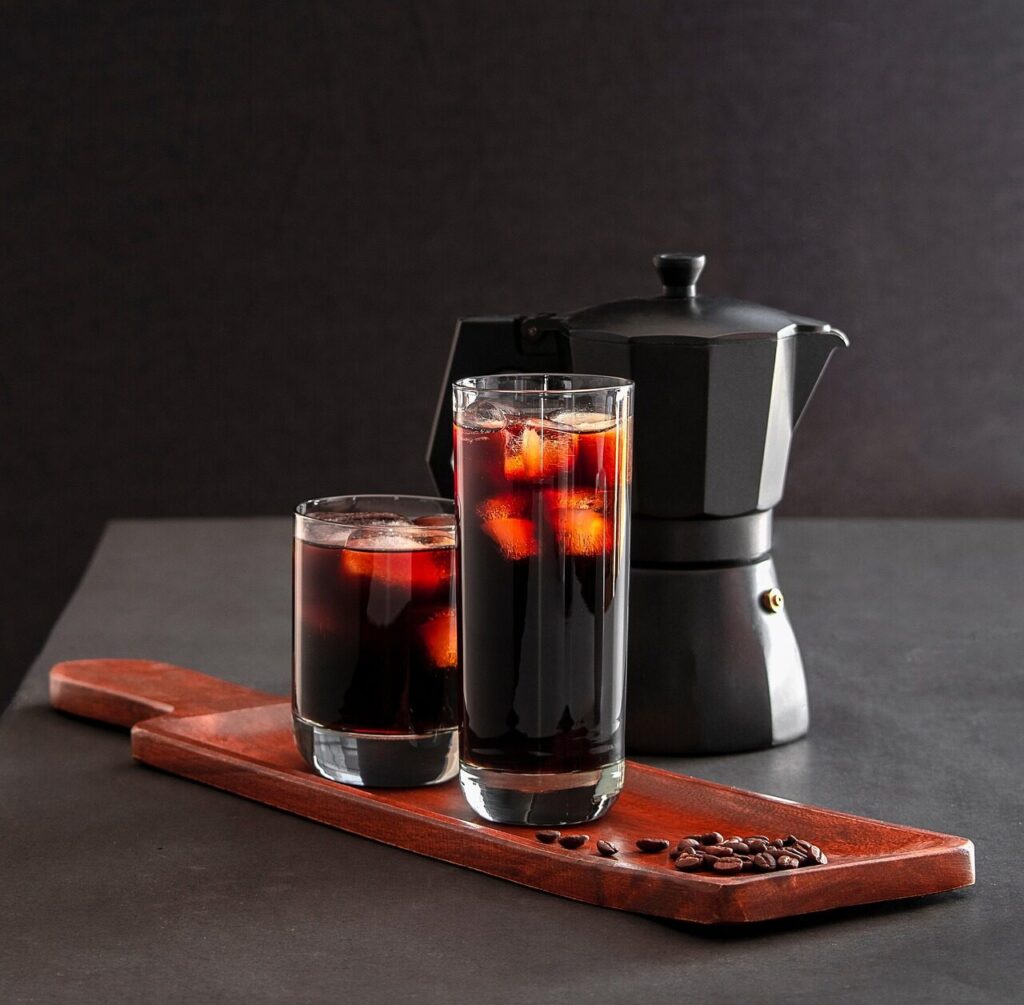
Dilution is the main complaint about iced coffee at home. Most of it comes from a few avoidable habits. Here is what helps.
- Use more ice, not less. A glass packed with ice melts more slowly than a half-full one, because the cubes keep each other cold.
- Choose large, dense cubes. Small or cloudy cubes melt quickly. Clear, solid cubes from a silicone mold last longer.
- Freeze coffee in a tray. Leftover espresso or cold brew frozen into cubes chills the drink without diluting it. Pour cold milk over them and add a fresh shot.
- Put milk in first. It cools the glass and the espresso lands in something cold, so the ice has less work to do.
- Drink it fresh. An iced latte is at its best in the first 10 to 15 minutes.
If you often make more than one, a jar of chilled cold brew concentrate in the fridge is the fastest route to a consistent glass.

Milk and Sweetener Choices
Whole milk gives the creamiest result, and semi-skimmed works but tastes lighter. Oat milk is a popular alternative because it stays smooth and mild. Soy and almond milk can sometimes separate when they meet hot, acidic espresso. Chilling the milk well and pouring the espresso slowly reduces that.
Many plant milks sold for baristas are formulated to resist splitting, so check the label if separation bothers you. Whichever you choose, keep it very cold.
Sugar does not dissolve well in cold liquid, so sweeten the hot espresso or use syrup. To make simple syrup:
- Combine 100 g (½ cup) of sugar with 100 ml (scant ½ cup) of water in a small saucepan.
- Warm over low heat, stirring, until the sugar has fully dissolved. It does not need to boil.
- Cool completely and store in a clean, sealed jar in the fridge. It keeps for about two weeks.
Simple Variations

Once the base drink works, small changes are easy. Add them to the glass before the milk so they mix evenly.
- Vanilla: 1 tsp (5 ml) vanilla syrup, or one or two drops of vanilla extract into the syrup.
- Cinnamon: a pinch of ground cinnamon stirred into the hot espresso. Our cinnamon coffee article goes deeper on this pairing.
- Chocolate: 1 tbsp (15 ml) of chocolate syrup in the glass for a mocha-style drink.
- Salted caramel: a small pinch of salt with caramel syrup, stirred well.
Keep the extras modest. Too much syrup drowns out the espresso, and then you are drinking a cold milkshake with a hint of coffee.
Fixing Common Problems
| Problem | Likely cause | Fix |
|---|---|---|
| Tastes watery | Weak coffee base or fast-melting ice | Use a double shot, bigger cubes, or coffee ice cubes. |
| Harsh or bitter | Over-extracted espresso or a very dark roast | Grind slightly coarser, shorten the shot, or try a medium roast. |
| Sour or thin | Under-extracted shot | Grind finer or lengthen the extraction time. |
| Milk separates into flakes | Plant milk reacting to hot, acidic coffee | Chill the milk well, pour slowly, or try a different brand of plant milk. |
If the drink is bitter or sour, the cause is usually in the espresso, not in the iced setup. Grinding is the first thing to adjust, and our guide to grinding coffee beans would help, but the espresso guide linked above covers the same extraction basics.
A Note on Caffeine
A double shot contains more caffeine than a single, and a large iced drink is easy to finish quickly. Caffeine sensitivity varies a lot between people. If you are pregnant, take medication, have high blood pressure, or notice jitters or poor sleep, ask your doctor how much coffee suits you. Using a single shot instead of a double is an easy way to reduce the amount.
A Quick Routine for Everyday Iced Lattes
Keep a tray of coffee ice cubes in the freezer, a jar of syrup in the fridge, and a carton of milk you like. With those three things ready, a good glass takes about two minutes.
Start with the 1:4 ratio. Then adjust the milk up or down by a splash until it tastes right to you. Write down the version you like, so you can repeat it exactly.
Frequently Asked Questions
What is the ratio of espresso to milk in an iced latte?
A good starting point is about 1 part espresso to 4 parts milk by volume, served over plenty of ice. For example, a 36 g double shot with 150 ml of milk. Use a little less milk if you want a stronger coffee flavor.
Can I make an iced latte without an espresso machine?
Yes. Use any strong, concentrated coffee, such as moka pot coffee, a concentrated AeroPress brew, or cold brew concentrate. Regular drip coffee at normal strength tends to taste weak once milk and ice are added.
Should I pour hot espresso directly over ice?
Yes, that works well. The ice cools the espresso almost immediately. Pour it slowly over cold milk and ice, then drink it soon after so the melting ice does not thin out the flavor.
Why does my iced latte taste watery?
Usually the coffee is too weak or the ice melts too fast. Use a double shot, pack the glass with large ice cubes, and consider freezing leftover coffee into cubes so they chill the drink without diluting it.
Which milk works best in an iced latte?
Whole milk gives the creamiest texture. Oat milk is a popular plant-based option because it stays smooth and mild. Some plant milks can separate in hot espresso, so keep them very cold and pour the coffee slowly.