

The simplest way to store coffee beans is in an airtight, opaque container in a cool, dark cupboard, away from the stove and the window. Keep them whole until you brew, and buy only as much as you will finish within a few weeks. Those few habits do most of the work.
The rest of this guide explains why they work, which containers are worth using, when the freezer helps, and how to tell that a bag has gone past its best.
Why Roasted Beans Go Stale
Roasted coffee starts losing flavor almost as soon as it cools. Four things drive that: oxygen, light, heat and moisture. Oxygen is the biggest one, because it slowly breaks down the aroma compounds and oils that give coffee its character.
Freshly roasted beans also release carbon dioxide for days after roasting. That gas is why a bag from a roaster is often sealed with a small one-way valve: gas can get out, but air cannot easily get in. It is also why very fresh beans can taste a little sharp or uneven in the first days after roasting.
Light and heat speed up the same chemical changes. Moisture adds another problem, since beans are porous and also pick up smells from whatever sits near them. A bag next to the spice rack or the fish drawer will taste like it.
How to Store Coffee Beans at Home
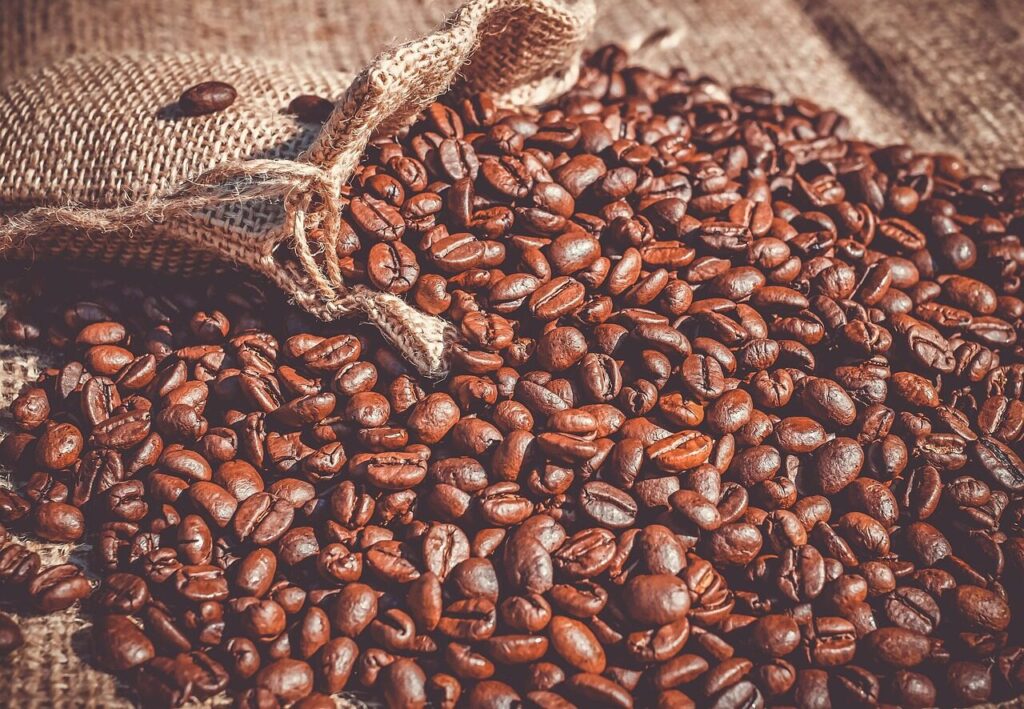
If you buy from a roaster, the bag it comes in is already a decent container, especially one with a valve and a foil-type lining. Squeeze out the extra air, fold or seal it tightly, and put it in a cupboard. Many people never need anything more.
If you buy larger bags, or the bag will not reseal properly, move the beans into a canister with a tight lid. Look for these features:
- Airtight seal. A gasket or a screw lid that closes fully is better than a loose lid.
- Opaque walls. Ceramic, stainless steel or dark-coated materials block light completely.
- Right size. A container that is mostly empty leaves a lot of air around the beans. Match the size to the amount you actually have.
- Dry and odor-free. Wash the container, dry it fully, and let it air out before you refill it. Leftover oils from old beans can turn rancid and affect the new batch.
Pour fresh beans on top of old ones only if you must. It is better to finish one batch, wipe the container, and start clean.
Where in the Kitchen
Choose a cupboard or drawer that stays at a steady, ordinary room temperature, roughly 20 °C / 68 °F. Avoid the shelf above the oven, the spot beside the kettle, and any counter that gets direct sun. A pantry shelf is usually ideal.
Storage Options Compared
| Option | Works well for | Watch out for |
|---|---|---|
| Original valve bag, resealed | Beans you will finish in a few weeks | Zippers that no longer close fully; air trapped inside |
| Opaque airtight canister | Everyday storage in a cupboard | Oversized containers; old oils left on the walls |
| Clear glass jar | Only inside a closed, dark cupboard | Light exposure on a counter or open shelf |
| Refrigerator | Not recommended for beans you use daily | Moisture, condensation and food odors |
| Freezer, in portions | Extra beans you will not use for weeks | Repeated thawing; air and frost in the container |
Should You Freeze Coffee Beans?
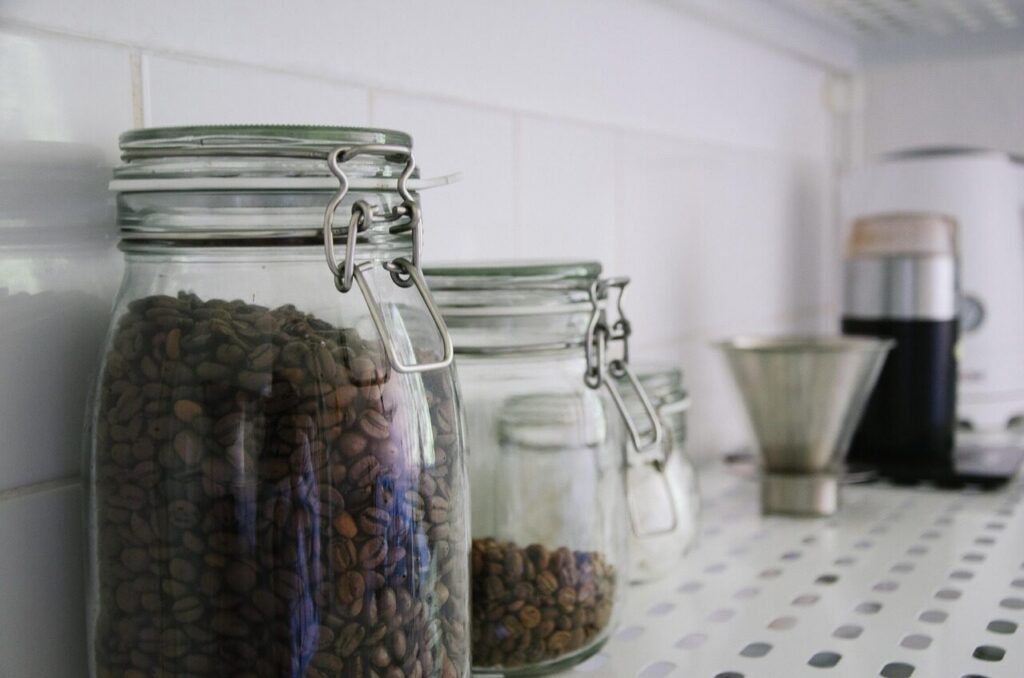
Freezing can slow staling, and many roasters and baristas use it for beans they will not finish soon. It is a good option if you bought a large bag, received beans as a gift, or want to keep a special lot for later. It is not a way to rescue beans that are already stale.
The fridge is a different story. It is humid, it is full of strong smells, and it gets opened constantly. Beans kept there are more likely to absorb odors and moisture than to stay fresh.
If you freeze, do it carefully:
- Divide the beans into small portions, each roughly what you will use over one to two weeks. For example, 100 g / 3.5 oz per portion suits a single drinker.
- Press the air out of each bag or use small airtight containers. Freezer bags with a good seal work if you squeeze them flat.
- Freeze them as soon as possible after opening the bag, while the beans are still in good shape.
- When you need a portion, take it out and leave it sealed until it reaches room temperature. Opening it cold lets condensation form on the beans.
- Once thawed, keep that portion in your regular cupboard container. Do not refreeze it.
Grind straight from the thawed beans. Some people grind frozen beans successfully, but results vary by grinder, so test it with your own equipment before relying on it.

How Long Do Beans Stay Fresh?
There is no exact expiry date for roasted coffee, because freshness fades gradually. As a rule of thumb, many roasters suggest drinking beans within a few weeks of the roast date. Coffee that is a few weeks past that is usually still pleasant, just flatter. Beans that are months old are safe to drink in most cases but taste muted.
Two practical points follow from this. First, look for a roast date on the bag, not only a best-before date. Our guide on how to choose coffee beans covers what else to check at the shelf.
Second, buy to match your consumption. Here is a quick way to work it out. If you drink two cups a day with 15 g in each, you use about 30 g daily. A 250 g / 8.8 oz bag then lasts a little over eight days, and a 1 kg / 2.2 lb bag lasts about a month. If a large bag sounds too big for your pace, plan to freeze part of it right away.
Does Roast Level Change the Rules?
Darker roasts often show oils on the surface and can seem more stable, but those oils can also go rancid if the beans sit too long in warm, open air. Lighter roasts tend to hold their delicate aromatics for a shorter stretch of peak flavor. The storage method stays the same for both. If you want to understand how roast levels differ in the cup, see our piece on light, medium and dark roast.
Whole Beans or Ground Coffee
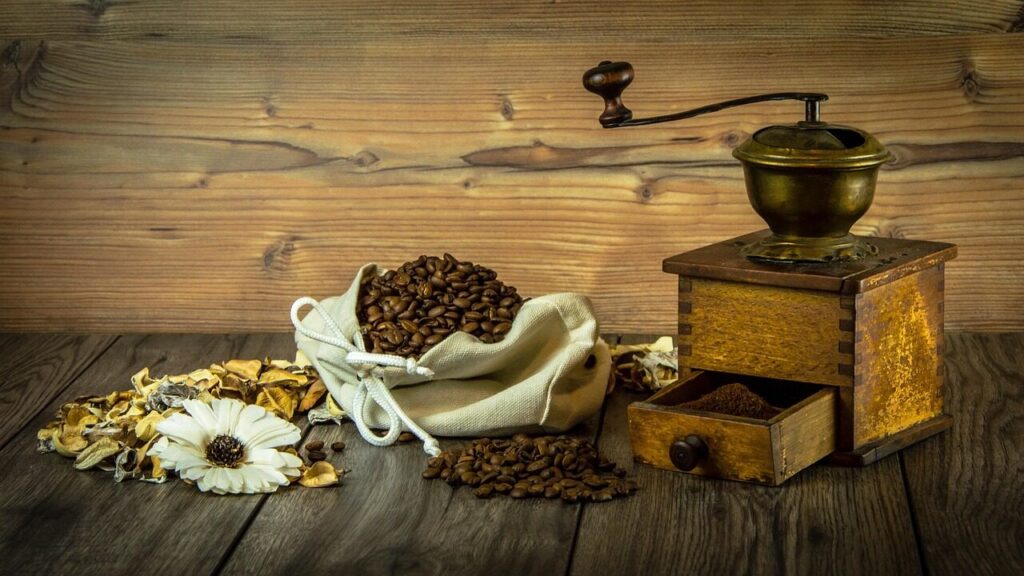
Ground coffee stales much faster than whole beans because grinding exposes far more surface area to air. A bag of pre-ground coffee can lose noticeable aroma within days of opening. If you can only buy ground, buy smaller bags more often and seal them tightly after each use.
Whole beans give you more room for error. Grind just before brewing and use the setting that matches your method. Our pages on grinding coffee beans and the coffee grind size chart go through the details.
One habit to avoid is leaving a full load of beans in the grinder hopper for days. Most hoppers are not airtight and many are clear plastic. Load only what you will grind in a day or so, and keep the rest in its container.
Signs Your Beans Have Gone Stale
You do not need to guess. Stale beans usually show themselves in a few ways:
- Weak smell. Fresh beans smell strong when you open the bag. Stale beans smell faint, dusty or like cardboard.
- Little bloom. When hot water first touches fresh grounds in a pour-over, they puff up and bubble as gas escapes. Stale grounds barely react. You can watch for this when you follow our V60 pour-over guide.
- Flat or papery taste. The cup tastes thin, dull or bitter without any sweetness behind it.
- Rancid smell. A sharp, paint-like or stale-oil odor means the oils have oxidized. Throw those beans out instead of trying to brew around it.
- Visible moisture or mold. Damp beans or any fuzzy growth should be discarded immediately.
Beans that are simply a little old are not dangerous. They just make a less interesting cup. A finer grind or a slightly stronger recipe can compensate a little, but it will not bring the lost aroma back.
A Simple Check on Your Own Setup
Every kitchen is a bit different, so test your storage once. Brew the same beans with the same recipe in the first week, and again about two to three weeks later, tasting both without adding milk or sugar. If the later cup is clearly flatter, shorten the time you keep beans open, buy smaller bags, or freeze a portion sooner.
Pairing good storage with a measured recipe makes a bigger difference than most equipment upgrades. Our overview of making quality coffee shows where freshness fits among the other variables.
Frequently Asked Questions
Can I keep my coffee beans in the refrigerator?
It is not recommended for beans you use every day. The fridge is humid and full of food odors, and each time you take the container out, condensation can form on the beans. A cool, dark cupboard works better for regular use.
Is it okay to leave beans in the grinder hopper?
Only for a day or so. Most hoppers are not airtight and many let in light, so beans stale faster there than in a sealed container. Load what you need for the next few brews and store the rest elsewhere.
Do I need a vacuum canister to store coffee beans?
No. A tight-sealing, opaque container or the original valve bag is enough for most households. Vacuum canisters can reduce the air around the beans, but buying smaller amounts and keeping them cool and dark matters more.
Can I refreeze coffee beans after thawing them?
It is best not to. Each freeze and thaw cycle can add moisture through condensation. Freeze beans in small portions, thaw only one at a time, and keep that portion in your cupboard container until it is used up.