

Espresso crema is the layer of reddish-brown foam that forms on top of a freshly pulled shot. It is an emulsion of tiny gas bubbles, coffee oils, and dissolved compounds, and it is a natural result of brewing hot water through finely ground coffee at high pressure.
Crema looks impressive, and it does tell you a few things about your beans and your technique. But it is not a guarantee of flavor. A shot with beautiful crema can taste harsh, and a modest layer can taste excellent.
What espresso crema is made of
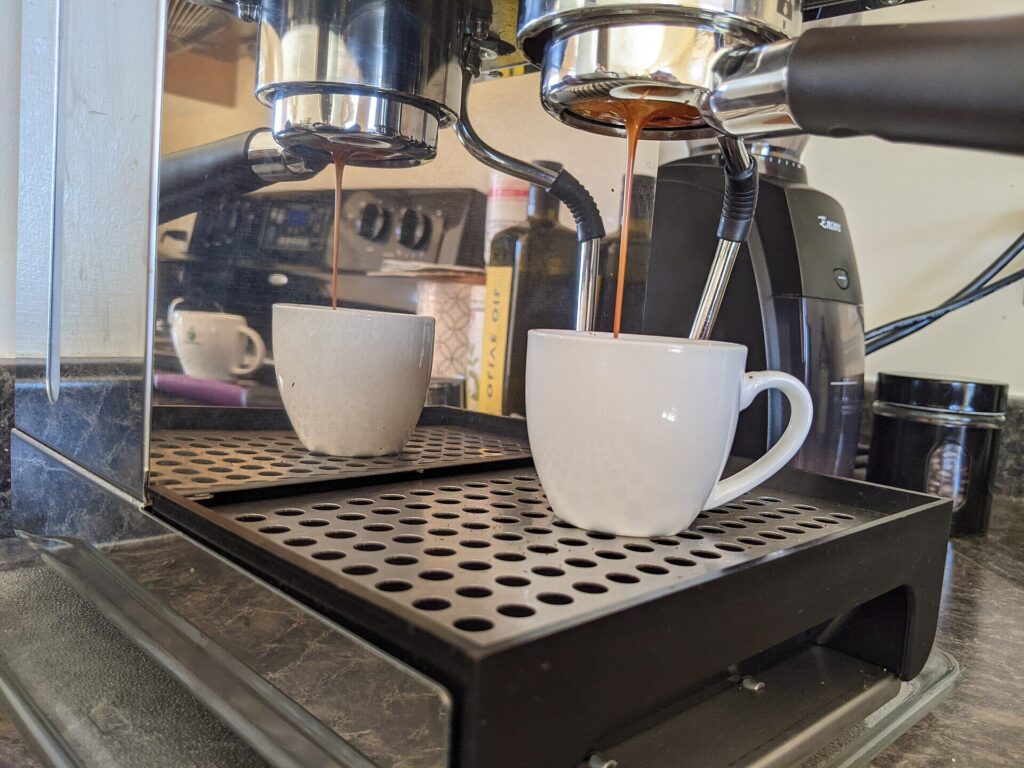
Roasting traps carbon dioxide inside coffee beans. When you grind and brew, a lot of that gas escapes into the water. Along with the gas, the water carries coffee oils and fine particles that help stabilize the bubbles.
The result is a thin, dense foam, often described as the color of hazelnut or tiger fur. It usually sits a few millimeters thick, depending on the coffee and the machine. You can think of it as a very fine, short-lived coffee foam rather than a separate ingredient.
How espresso crema forms
Most espresso machines push water through the coffee at around 9 bar (roughly 130 psi). Under that pressure, the water dissolves a good amount of CO2 from the grounds. Once the liquid leaves the basket and hits normal air pressure, the gas comes out of solution as countless small bubbles.
Those bubbles rise and gather on the surface, held together by the oils and compounds in the shot. This is why crema is so closely tied to pressure. Methods without that pressure, such as a French press or standard drip, release plenty of CO2 but do not produce a lasting foam.
Crema is also a fairly modern feature. Lever machines developed in Italy in the 1940s are generally credited with making a stable layer of crema a normal part of espresso. For the wider story of how the drink changed, see our history of espresso.
What your crema can tell you
Crema is a useful visual clue, especially when you are adjusting your grinder. Here is how to read it, with the caveat that taste should always have the final say.
| What you see | Likely cause | What to try |
|---|---|---|
| Thick, hazelnut to reddish-brown, fine texture, lasts a minute or two | Fresh beans and a balanced extraction | Keep your recipe |
| Pale, thin, gone within seconds | Grind too coarse, dose too low, or stale beans | Grind finer, check the roast date |
| Dark brown with a hole or light spot in the center | Over-extraction, channeling, or a very dark roast | Level the grounds, try a slightly coarser grind |
| Large, uneven bubbles and blotchy color | Beans only days off roast, or uneven coffee bed | Rest the beans longer, distribute grounds evenly |
If a shot tastes thin and sharp, our guide to fixing sour, under-extracted coffee explains what to change beyond the grind.
Why bean freshness and type change the crema
Fresh roasted beans hold more CO2, so they make more crema. That gas keeps escaping over time, which is why old beans give a flat, pale shot. The opposite problem exists too: beans only a day or two out of the roaster can be so gassy that the shot looks bubbly and extracts unevenly. Many baristas find that espresso settles into a good rhythm after the first several days of rest, though this varies by roast. To slow the loss of gas and aroma, follow our advice on how to store coffee beans.
Bean type matters as well. Robusta generally produces a thicker, longer-lasting crema than Arabica, which is one reason some traditional Italian blends include it. Many light-roast, all-Arabica shots show a thinner, paler crema, and that is perfectly normal. Our comparison of Arabica and Robusta covers the differences in flavor and caffeine.
Real crema versus manufactured crema
Not all crema comes from good espresso technique. Some machines and baskets are designed to create foam regardless of the coffee used.
- Pressurized (dual-wall) baskets have a small exit hole that builds pressure artificially and forces air into the shot. They produce a thick, foamy top even with pre-ground or stale coffee.
- Pod and capsule machines often use similar mechanisms to create a consistent foam.
- Stovetop moka pots do not reach espresso pressure, so a true crema does not form, even though the coffee is strong and concentrated.
If your crema looks identical no matter what beans you use, a pressurized basket is probably the reason. That is not a flaw, just something to know when you judge your shots. If you are weighing equipment, our guide on choosing a home espresso machine explains how these designs differ in practice.
Does crema taste good?
On its own, crema is often more bitter than the liquid underneath, and it can feel slightly dry on the tongue. That is why opinions differ. Some drinkers stir it into the shot, which blends the aroma and body together. Others spoon off a little to soften the bitterness.
Neither approach is wrong. Try one shot each way and pick what you like. In milk drinks, the crema mixes into the milk and mostly disappears, so it matters far less there.
How to get better crema at home
These steps give a reliable starting point for a standard double shot. Adjust from there based on taste.
- Use beans roasted within the past several weeks, ideally rested for about a week after roast.
- Grind just before brewing, as fine as needed to make the shot run in roughly 25 to 30 seconds.
- Dose about 18 g (a little over 2 tbsp of whole beans by volume, though weighing is far more accurate) into the basket.
- Level the grounds and tamp evenly so water cannot find a shortcut.
- Aim for about 36 g (about 1.3 fl oz) of espresso in the cup.
- Keep brew water in the range of about 90 to 96 °C (195 to 205 °F). Our page on the best water temperature for brewing coffee explains how small changes affect flavor.
Preheat the portafilter and cup so the shot does not lose heat on the way. Crema fades quickly, so drink within a minute or so of pouring.
Judging a shot by more than its top
Use crema as one clue alongside the shot time, the weight in the cup, and above all the taste. If the espresso is balanced and sweet, a thin or pale crema is not a reason to change anything. If it tastes wrong, look at the grind and dose first, and treat the foam as a hint rather than a verdict.
Frequently Asked Questions
Is crema supposed to be on every espresso?
On a properly brewed shot from a pressurized machine, yes, some crema should appear. Very light roasts, older beans, or low-pressure methods may produce little or none. A thin layer does not necessarily mean the shot is bad, so rely on taste.
Why does my crema disappear so fast?
Crema is made of fragile gas bubbles, so it always fades. If it vanishes in seconds, the beans may be stale, the grind too coarse, or the dose too small. A fresh, well-extracted shot usually holds its layer for a minute or two.
Can you get crema from a moka pot or French press?
Not true crema. Those methods do not reach espresso pressure, so the CO2 does not form a stable foam. Some moka pots have a valve that adds a bubbly top layer, but it differs from real espresso crema.
Does more crema mean more caffeine?
No. Crema is mostly gas and oils, and its thickness does not indicate caffeine content. Caffeine depends mainly on the bean type, the dose, and the amount of water. Robusta has more caffeine and also tends to make thicker crema, but the two are separate effects.
Should I stir the crema or leave it?
It is personal preference. Stirring blends the foam into the shot for a more even taste. Skimming off some crema can reduce bitterness. Try both and see which suits your beans and your palate.