

You can make good coffee without a coffee maker with three things: ground coffee, hot water and something to separate the grounds from the liquid. A saucepan, a mug and a fine sieve cover almost every situation, from a hotel room to a kitchen with a broken machine.
Below are four methods that work with ordinary kitchen gear. Each one trades a little convenience for a different cup, so the table will help you pick.
What You Need to Make Coffee Without a Coffee Maker
Every method here follows the same logic: coffee and water sit together long enough to extract flavor, then you strain. The details change the cup, but the basics stay fixed.
- Ratio: start with 15 g of ground coffee (about 3 level tbsp) per 250 ml (about 1 cup) of water. Adjust from there. Our coffee to water ratio chart shows how to go stronger or lighter.
- Water temperature: 93–96 °C (200–205 °F). Bring water to a boil, then wait about 30 seconds before pouring.
- Grind: medium to medium-coarse for most of these methods. If you only have pre-ground coffee, check the label, since “all-purpose” grinds usually suit steeping well. The coffee grind size chart explains each size.
| Method | Grind | Time | Cup character |
|---|---|---|---|
| Saucepan steeping | Medium-coarse | About 4 minutes | Full body, some sediment |
| Sieve and filter pour-over | Medium | About 3 minutes | Clean, lighter body |
| Mug steeping | Medium-coarse | About 4 minutes | Round, slightly heavy |
| Jar cold brew | Coarse | 12–16 hours | Smooth, low acidity |
Saucepan Coffee (Cowboy Style)
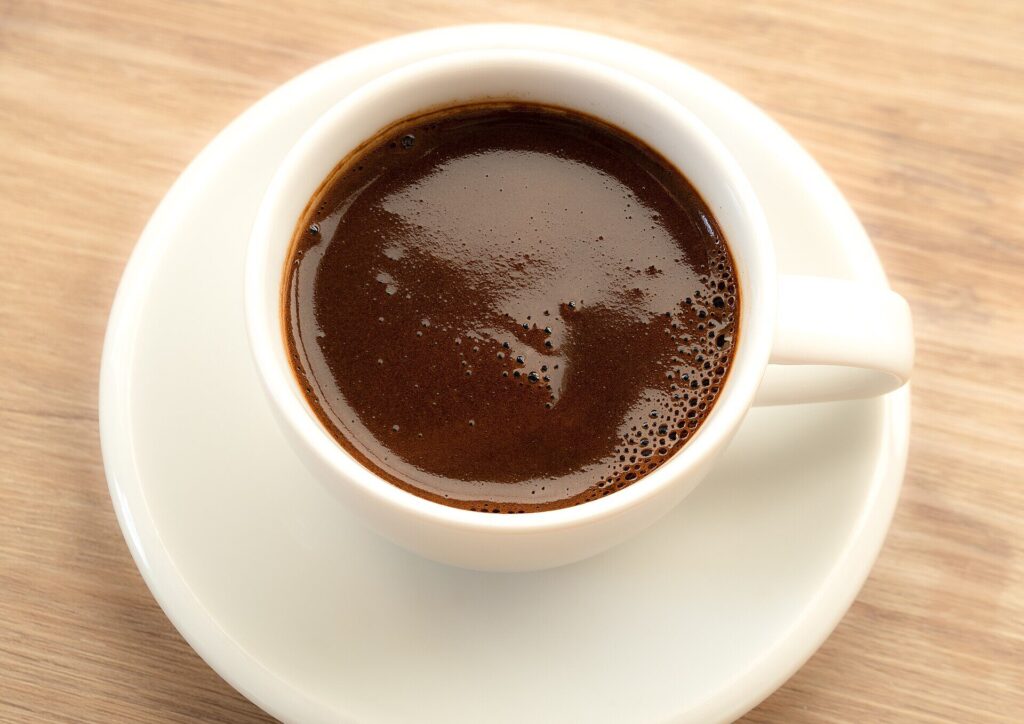
This is the most forgiving method, and it works for several cups at once. The one rule is to take the pot off the heat before the coffee goes in. Boiling the grounds pushes the cup toward bitterness.
You need: a small saucepan with a lid, a spoon, a mug, and optionally a sieve.
- Heat 500 ml (2 cups) of water until it just reaches a boil.
- Remove the pot from the heat and wait 30 seconds.
- Stir in 30 g (about 6 level tbsp) of medium-coarse ground coffee.
- Cover and let it steep for 4 minutes. Do not stir during this time.
- Sprinkle about 1 tbsp (15 ml) of cold water over the surface. The cold water helps the floating grounds sink.
- Wait one more minute, then pour slowly into mugs. Stop when you reach the last mouthful, where the sludge collects.
If your coffee is very fine, pour through a sieve to catch the extra grounds. Fine grounds also over-extract more easily, so shorten the steep to 3 minutes.
Sieve and Filter Pour-Over
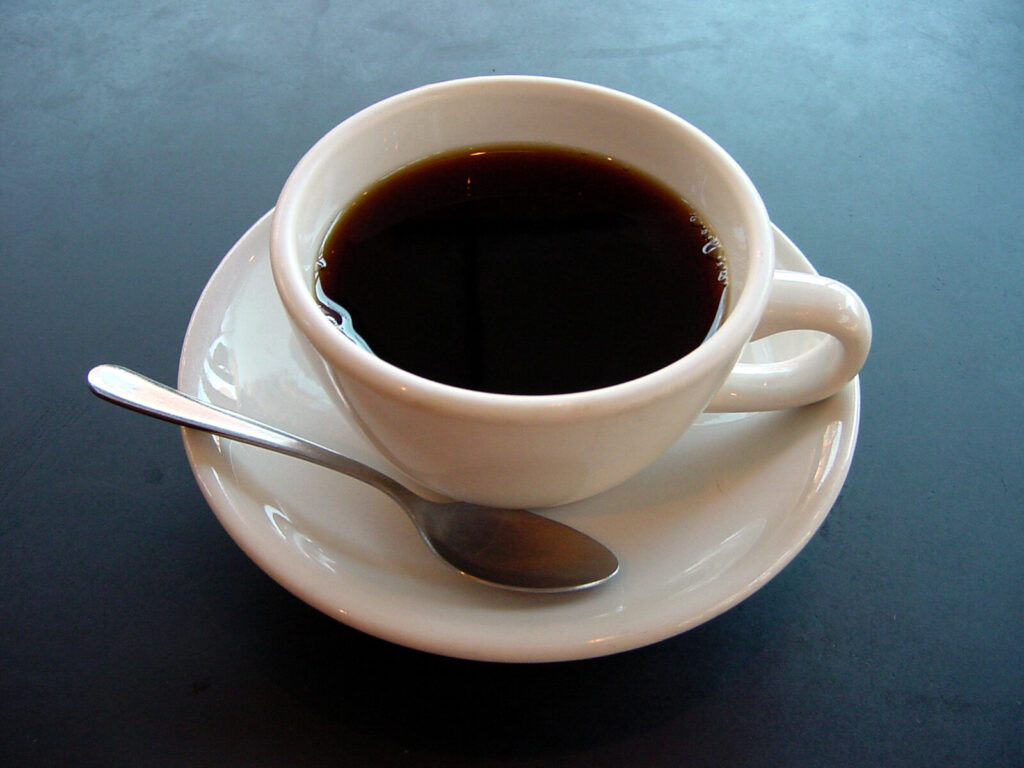
If you want a cleaner cup, a homemade pour-over is the closest you will get to filter coffee. You only need a way to hold a filter above a mug.
You need: a mug, a fine-mesh sieve that rests across its rim, a paper coffee filter (or a clean cotton cloth), and a kettle or pot with a spout.
- Fold the filter and set it inside the sieve over the mug.
- Rinse the filter with hot water and discard the water from the mug. This removes papery taste and warms the mug.
- Add 15 g (about 3 level tbsp) of medium-ground coffee.
- Pour 40 ml (about 3 tbsp) of 93–96 °C (200–205 °F) water over the grounds and wait 30 seconds so the coffee can release gas.
- Pour the rest of the water, up to 250 ml (1 cup) in total, in slow circles over about a minute.
- Let it drain fully. The whole process should take about 3 minutes.
If the coffee drips through in under 2 minutes, the grind is too coarse for this setup. If it takes more than 4, it is too fine or the filter is clogged. A paper towel can replace a filter in a pinch, but it often slows the flow and may add a faint paper taste, so rinse it well. Our guide to paper filters covers how filter choice affects flavor.
Mug Steeping With a Sieve
This is the simplest method, and it works well with a single serving. It is similar to a French press, only without the plunger.
- Put 15 g (about 3 level tbsp) of medium-coarse coffee in a mug.
- Pour in 250 ml (1 cup) of 93–96 °C (200–205 °F) water and stir once.
- Steep for 4 minutes. A crust of grounds will form on top.
- Stir the crust gently and skim off any foam if you like.
- Wait 1–2 minutes for the grounds to settle, then pour through a sieve into a clean mug.
Decanting into a second mug stops the brew from continuing to extract, which keeps the last sips from turning harsh.

Cold Brew in a Jar
For a hot-weather option with no heating at all, a jar and a fridge are enough. Combine 80 g (about 1 cup) of coarse ground coffee with 1 L (about 4 cups) of cold water in a large jar. Stir, cover, and leave it in the refrigerator for 12–16 hours.
Strain through a fine sieve lined with a paper filter or cloth, which may take a few minutes. The result is fairly strong, so dilute it with water or milk to taste. For a stronger concentrate and storage tips, see our cold brew concentrate recipe.
If You Have a Small Pot, Try the Turkish Approach
Turkish coffee needs no filter at all: very finely ground coffee is heated with water in a small pot, then the grounds settle in the cup. A traditional cezve is ideal, but a very small saucepan will do if you watch the heat carefully. We cover the technique, including how to build the foam, in how to make foamy Turkish coffee. Note that this needs a powder-fine grind, which pre-ground filter coffee will not provide.
Fixing Common Problems
| Problem | Likely cause | Adjustment |
|---|---|---|
| Bitter, harsh taste | Water too hot, grounds boiled, or steeped too long | Wait 30 seconds after boiling and shorten the steep by a minute |
| Weak, sour taste | Too little coffee or too short a steep | Add 2–3 g more coffee or steep a minute longer |
| Gritty cup | Grind too fine for the strainer | Use a finer sieve, double-strain, or grind coarser next time |
Without a grinder, crushing beans in a bag with a rolling pin gives uneven pieces. That unevenness is why the long, forgiving methods above, such as saucepan steeping and cold brew, suit crushed beans better than pour-over.
Choosing a Method for Tonight
For a quick single cup, use mug steeping. For a cleaner flavor, set up the sieve and filter. For several cups, use the saucepan. And if you miss espresso, our guide to making espresso without a machine shows what is realistically possible without one.
Frequently Asked Questions
Can I make coffee without a filter?
Yes. Steeping methods such as saucepan or mug brewing need only a sieve or a careful pour, and Turkish-style coffee needs none at all. A clean cotton cloth also works if you have no paper filters.
Can I use instant coffee instead?
You can, and it needs no equipment beyond hot water and a mug. It tastes different from freshly brewed coffee, though, and strength varies by product, so follow the package directions and adjust to taste.
How do I keep grounds out of my cup?
Let the coffee rest for a minute or two after steeping so the grounds sink, then pour slowly and stop before the last sip. Passing it through a fine sieve into a second mug removes most of the rest.
Does coffee made in a saucepan taste bitter?
It can if the grounds are boiled or left in contact for too long. Removing the pot from the heat before adding coffee and steeping for about four minutes usually avoids that.