

The difference in latte vs cappuccino is mostly about how much milk goes in and how that milk is textured. A latte has a lot of steamed milk and only a thin cap of foam. A cappuccino has less milk, and a thick layer of foam sits on top. A flat white lands between them: a small drink with a stronger coffee taste and silky, barely foamy milk.
All three start with espresso, so the real differences are volume, foam and balance. Once you know what to look for, you can order with confidence and build each one at home.
Latte vs cappuccino vs flat white at a glance

The table shows the typical build of each drink. Cafes vary, especially in the US, where sizes tend to run larger than in Italy, Australia or the UK. Treat these as common starting points rather than strict rules.
| Drink | Typical cup size | Espresso | Milk texture | Taste |
|---|---|---|---|---|
| Latte | 240–350 ml (8–12 oz) | Single or double shot | Steamed milk with a thin layer of fine foam | Mild, creamy, sweet from the milk |
| Cappuccino | 150–180 ml (5–6 oz) | Single or double shot | Steamed milk plus a thick, airy foam cap | Balanced, light, with a noticeable espresso edge |
| Flat white | 160–180 ml (5.5–6 oz) | Usually a double shot | Thin, glossy microfoam with almost no cap | Coffee-forward, smooth, velvety |
If you remember one thing, remember this: the latte is the milkiest, the cappuccino is the foamiest, and the flat white is the most coffee-forward.
What makes a latte a latte
A latte is espresso topped with a generous amount of steamed milk, finished with a thin layer of foam, often under a centimeter. The milk is textured as microfoam: tiny, even bubbles that make it look like wet paint and pour smoothly. That texture is why lattes are the usual canvas for latte art.
Because the milk volume is high, the espresso is diluted. You taste sweetness and creaminess first, with the coffee in the background. That makes the latte the easiest of the three to enjoy if you are new to espresso, and it is also the drink most often flavored with syrups. Our cafe latte guide goes deeper on the drink itself.
One ordering trap: in Italy, latte simply means milk. Ask for a latte in an Italian bar and you will probably get a glass of milk. The drink you want is a caffè latte or latte macchiato.
What defines a cappuccino
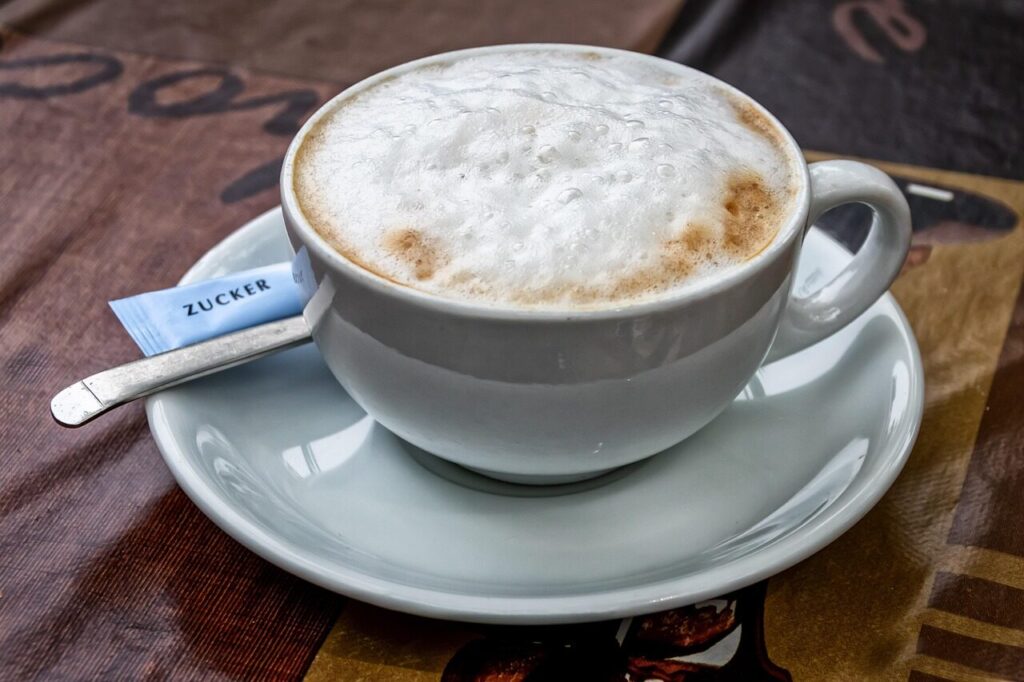
A traditional cappuccino is built in roughly equal parts: espresso, steamed milk and foam. The cup is small, so the drink feels light and the espresso stays audible. The foam is thicker than in a latte, and you can often see a distinct cap sitting above the liquid.
That foam changes how the drink tastes and feels. The first sip is airy and slightly sweet. The deeper part of the cup is hotter and more concentrated in coffee flavor. Many cafes now serve a “wet” version with thinner foam, or a “dry” one with more foam and less milk, so the line between cappuccino and latte can blur. For the classic proportions and serving traditions, see our cappuccino article.
The foam on a cappuccino is not just decoration. It holds heat, so the drink stays warm longer than a thin-textured one of the same size.
Where the flat white fits
The flat white comes from Australia and New Zealand, and both countries have claimed it, so its exact origin is still debated. What is not debated is the style. It is a small drink with a double shot of espresso and steamed milk textured so finely that the surface looks flat and glossy.
Compared with a latte, there is less milk for the same amount of coffee, so the espresso comes through clearly. Compared with a cappuccino, there is almost no foam cap, so the texture is smooth rather than airy. If you find lattes too mild and cappuccinos too frothy, this is the drink to try. Our flat white guide covers its character in more detail.

Why the same name gives you different drinks
Ordering by name works only up to a point. Three things shift from cafe to cafe.
- Size. A large US latte can hold several times the milk of a small European cappuccino. Strength per sip changes accordingly.
- Number of shots. A bigger cup does not always mean more espresso. Ask how many shots are in it if strength matters to you.
- Foam style. Some baristas make a cappuccino with a thin, wet texture that is close to a flat white. Others pour a latte with a thick cap.
Caffeine follows the shots, not the milk. A double-shot latte and a double-shot flat white contain roughly the same amount, even though the flat white tastes stronger. For general caffeine ranges, our guide on how much caffeine is in a cup of coffee is a useful reference. If you are sensitive to caffeine, pregnant or taking medication, ask your doctor how much suits you.
How to make all three at home with one setup

You can make every drink above with the same equipment and the same espresso. Only the milk changes.
Equipment and ingredients
- Espresso machine with a steam wand (or another way to make strong concentrated coffee and froth milk)
- 18 g / about 3 level tablespoons of finely ground coffee for a double shot
- Whole milk, cold from the refrigerator, at about 4 °C / 39 °F
- Milk pitcher of about 350 ml / 12 oz
- Kitchen scale and a thermometer (optional but helpful)
- Pull a double shot: 18 g of ground coffee for about 36–40 ml / 1.2–1.4 oz of espresso, in roughly 25–30 seconds. Aim for the same shot every time, so the milk is the only variable. If the result tastes harsh, our guide to bitter coffee causes and fixes can help you adjust.
- Pour cold milk into the pitcher. Use the amount in the table below.
- Purge the steam wand, then place the tip just below the surface of the milk. Add air for the time needed for your drink, then lower the pitcher so the tip stays submerged and the milk spins in a whirlpool.
- Stop at 55–65 °C / 130–150 °F, which is hot but still comfortable to hold the pitcher. Hotter milk loses sweetness.
- Tap the pitcher on the counter and swirl it to break up large bubbles until the milk looks glossy.
- Pour into the espresso. Start high for a latte or flat white to blend the milk in, and spoon the foam on top for a cappuccino.
| Drink | Steamed milk | Air added | Cup |
|---|---|---|---|
| Latte | 200 ml / 7 oz | Short, gentle | 240 ml / 8 oz |
| Cappuccino | 100–120 ml / 3.5–4 oz | Longer, for a thick cap | 150–180 ml / 5–6 oz |
| Flat white | 120 ml / 4 oz | Very short, fine | 160–180 ml / 5.5–6 oz |
The air you add, called stretching, is the part that takes practice. Our walkthrough on how to steam milk for latte covers wand position and common mistakes.
Choosing the right drink for your taste
Pick by what you want from the cup, not by tradition.
- You want something mellow and creamy: a latte. The large milk volume also holds up well to a little syrup.
- You want a lighter, airy drink with a visible espresso presence: a cappuccino, especially in a small cup.
- You want to taste the coffee itself in a milk drink: a flat white, ideally made with a double shot.
The roast matters too. A darker roast gives chocolate and caramel notes that pair easily with milk, while a lighter roast can add fruit or acidity that stands out more in a flat white than in a latte. Our overview of light, medium and dark roast explains what to expect.
A quick way to remember the difference
Look at the cup before you taste it. A tall, mostly white drink with a thin surface is a latte. A small cup with a domed foam cap is a cappuccino. A small cup with a smooth, shiny surface and a darker color is a flat white. If a cafe’s version does not match, ask the barista how it is made. Most are glad to explain.
Frequently Asked Questions
Which has more caffeine, a latte or a cappuccino?
It depends on the number of espresso shots, not the milk. A double-shot latte and a double-shot cappuccino have about the same caffeine. Many cafes put a single shot in smaller drinks and a double in larger ones, so ask how many shots go in.
Is a flat white stronger than a latte?
It tastes stronger because it has less milk around the same espresso. The caffeine amount depends on the shots, so a double-shot latte and a double-shot flat white are close. The flat white simply lets the coffee flavor come through more clearly.
Can I make a cappuccino without an espresso machine?
Yes. Brew strong, concentrated coffee with a moka pot or AeroPress, then froth hot milk with a handheld frother or a jar. The taste differs slightly from true espresso, but you still get the proportions and the foam cap that define a cappuccino.
Which of the three is best for latte art?
The latte and the flat white are the easiest, because their thin, glossy microfoam pours smoothly and holds a pattern. A cappuccino’s thick foam is harder to shape, though simple designs are still possible once your milk texture is consistent.