

Good french press coffee comes down to five things: a coarse grind, a ratio of about 1:15 coffee to water, water just off the boil, four minutes of steeping, and a slow plunge. Get those right and you get a full-bodied, heavy-textured cup with very little effort.
The press is an immersion brewer, so the coffee sits in the water the whole time instead of water passing through it. That makes it forgiving, but it also means small mistakes in grind or timing show up clearly in the cup. This guide gives you a tested recipe, a ratio table, and a troubleshooting chart.
What You Need for French Press Coffee
The list is short. A few of these items matter more than the press itself.
- A french press of 600 ml (20 oz) or larger
- 33 g (about 6 tbsp) of whole beans, medium to medium-dark roast
- 500 ml (17 fl oz) of fresh, filtered water
- A burr grinder, set coarse
- A kettle, a kitchen scale, and a timer
- A long spoon, wood or plastic so it doesn’t chip the glass
A scale is worth using. Tablespoons of coarse grounds vary a lot with roast level and grind, so the spoon measures here are only a rough guide.
If you’re still choosing beans, our guide on how to choose coffee beans covers what to look for on the bag. For a press, medium and medium-dark roasts with chocolate, nut or caramel notes tend to taste balanced. Very light roasts can taste thin unless you steep them a little longer.
Grind Size and Ratio
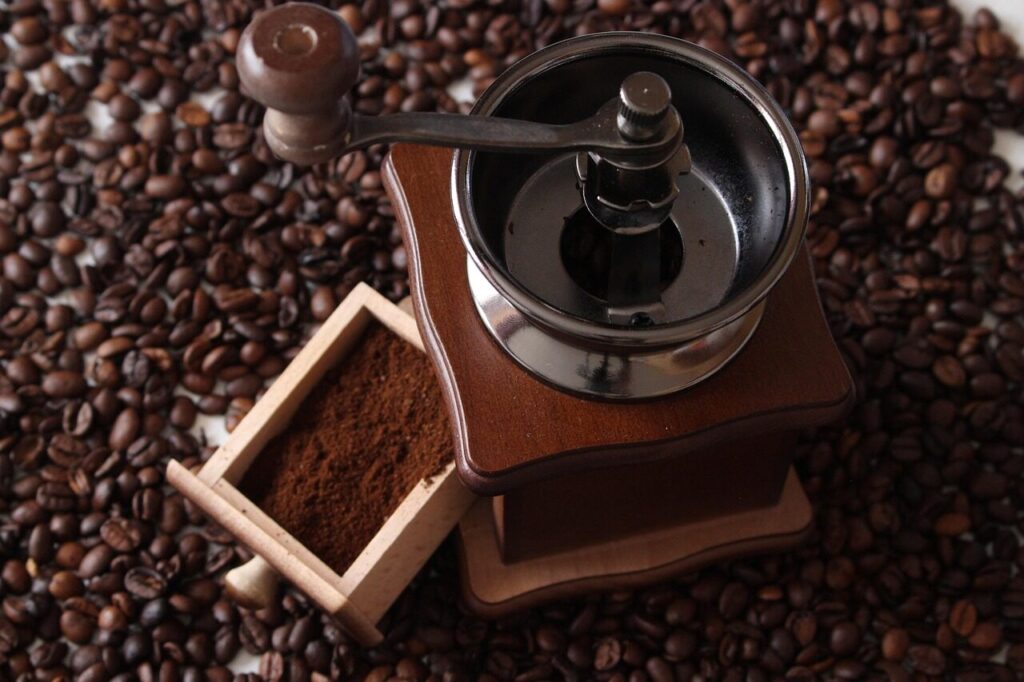
Grind coarse, about the texture of coarse sea salt or breadcrumbs. The metal mesh filter cannot catch fine particles, so a fine grind ends up as sludge in your cup. It also over-extracts, which makes the coffee bitter.
Grinding right before brewing makes a clear difference, because ground coffee loses aroma quickly. If you want more detail on burr types and settings, see our article on grinding coffee beans.
The ratio sets the strength. Start at 1:15 and adjust by small steps.
| Strength | Ratio (coffee:water) | Coffee for 500 ml / 17 fl oz water |
|---|---|---|
| Lighter | 1:17 | 29 g (about 5 tbsp) |
| Standard | 1:15 | 33 g (about 6 tbsp) |
| Strong | 1:13 | 38 g (about 7 tbsp) |
Change only one variable at a time. If the cup is too strong, adjust the ratio before touching the grind or the timer.
How to Make French Press Coffee Step by Step
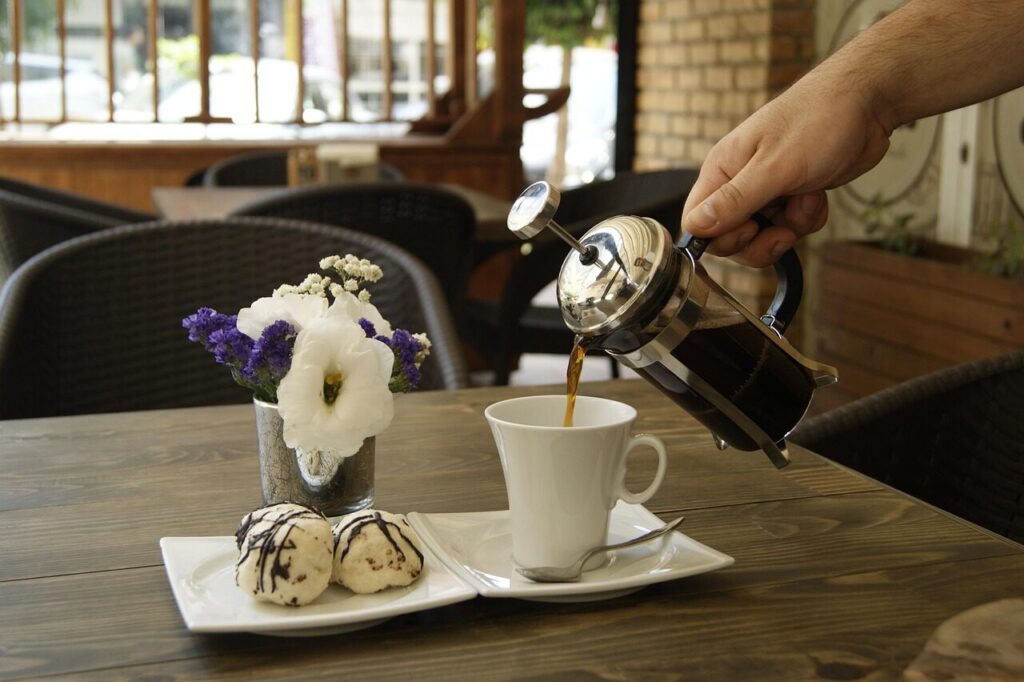
This recipe makes about 430 ml (14½ fl oz), roughly two mugs. The grounds absorb some water, so you get less in the cup than you pour in.
- Heat the water. Bring about 600 ml (20 fl oz) to a boil, then let it rest for 30 to 45 seconds. You want 93–96 °C (200–205 °F). Use a thermometer if you have one.
- Preheat the press. Pour a little hot water into the empty carafe, swirl it, and discard it. A cold glass carafe pulls the brew temperature down quickly.
- Grind and add the coffee. Grind 33 g (about 6 tbsp) coarse and tip it into the press. Give the carafe a gentle shake to level the bed.
- Bloom. Start your timer and pour about 70 ml (2½ fl oz) of water over the grounds, making sure all of them are wet. Wait 30 seconds. Fresh coffee bubbles and swells as it releases gas.
- Add the rest of the water. Pour the remaining water in a steady stream until you reach 500 ml (17 fl oz) total. Stir once, gently, to break up any dry pockets.
- Cover and steep. Set the lid on top with the plunger still up, which holds the heat in. Let it steep until the timer reads 4:00.
- Plunge slowly. Press the plunger down over 20 to 30 seconds, using light, even pressure.
- Serve right away. Pour all the coffee out of the press and into cups or a pre-warmed carafe.
Step 8 is the one people skip. Coffee left on the grounds keeps extracting, and a press that sits on the table will turn bitter within a few minutes.
Plunging and Pouring: Where Most Cups Go Wrong
If the plunger resists, stop pushing harder. Forcing it down stirs the bed, pushes fine particles through the mesh, and can send hot coffee up the sides. Pull the plunger up a little, then press again more gently.
If it feels too easy and drops straight down, your grind is probably too coarse or you’ve used too little coffee. A little resistance means the filter is working as it should.
Pour in one steady motion and stop when you see sediment reaching the spout. The last sip of a press is often the muddiest, so many people leave a small amount in the carafe on purpose.
The Crust-Skim Method for a Cleaner Cup
If you find the standard result too heavy or silty, try this variation. It gives a lighter, cleaner cup that is closer to a filter brew.
- Follow the recipe through the 4:00 mark, but do not plunge.
- Stir the floating crust with a spoon, then skim off the foam and any floating grounds.
- Let the coffee sit for another 5 minutes so the fines settle to the bottom.
- Pour slowly and don’t press at all, or lower the plunger just to the top of the liquid.
The trade-off is a slightly cooler cup and a bit less body. If you serve it in pre-warmed mugs, the temperature drop is hardly noticeable.
Troubleshooting Your French Press Coffee
When the coffee tastes off, match the symptom to the likely cause and change just one thing.
| What you taste | Likely cause | What to change |
|---|---|---|
| Bitter, harsh, dry finish | Grind too fine, water too hot, or steeped too long | Grind coarser, let the kettle rest longer, or shorten the steep to 3:30 |
| Sour, thin, salty | Under-extracted: grind too coarse or water too cool | Grind slightly finer, use water closer to 96 °C (205 °F), or steep to 4:30 |
| Muddy, silty | Too many fines, or the plunge was rushed | Use a burr grinder, plunge slowly, or try the crust-skim method |
| Weak, watery | Ratio too lean | Move from 1:17 toward 1:15 |
| Cold by the second cup | Cold carafe, or coffee left in the press | Preheat the press and decant into a warm carafe |
Blade grinders are the usual cause of muddy coffee. They produce a mix of boulders and dust, so the dust over-extracts while the larger pieces under-extract, and no setting fixes that.
Metal Mesh vs. Paper: What Ends Up in Your Cup
The press mesh lets coffee oils and a small amount of fine particles through. That is why the cup feels heavy and round compared with paper-filtered coffee. Our comparison of the paper filter and metal filter goes into the taste differences in more detail.
There is also a health angle. Research suggests that unfiltered coffee contains more of a compound called cafestol, which may raise LDL cholesterol in some people when they drink it regularly. If you have high cholesterol or other heart-related concerns, ask your doctor whether unfiltered coffee fits your diet. Some people choose to alternate with a paper-filtered method.
If you like the idea of full-immersion brewing but want a cleaner cup, the AeroPress uses a paper filter and a shorter steep. It is a good second brewer to have.
The name also causes some confusion. If you’ve seen the press called other things, French press or American press explains how the terms relate.
Cleaning and Care
Old coffee oils turn rancid and make fresh brews taste stale. Rinse the press right after use, and do not wash grounds down the sink. Tip them into the compost or trash, or use a fine strainer.
Unscrew the plunger assembly and separate the mesh and spring discs every few uses. Wash all the parts with warm water and mild dish soap. Let everything dry fully before reassembling, and check the carafe for cracks from time to time.
A Simple Routine to Repeat
Pick one bean and keep the recipe above fixed: 33 g, 500 ml, 4 minutes, 93–96 °C (200–205 °F). Brew it a few times so you know what that baseline tastes like. Only then start adjusting grind or ratio, one step at a time, and write down what you changed. After a handful of brews you will know exactly how your press, your grinder, and your beans behave together.
Frequently Asked Questions
How long should french press coffee steep?
Four minutes is a reliable starting point for medium to medium-dark roasts. Go to 3:30 if the cup tastes bitter, or 4:30 if it tastes sour or thin. Light roasts often benefit from the longer end of that range.
Can I use pre-ground coffee in a french press?
You can, but check that it is labeled coarse or French press grind. Standard drip or espresso grinds are too fine and will leave sludge in the cup and taste bitter. Freshly ground beans give a noticeably better flavor.
Is it okay to leave coffee in the press after plunging?
It is better not to. The plunger only pushes grounds to the bottom, so extraction continues and the coffee turns bitter. Pour everything into cups or a warmed carafe soon after plunging.
Can I make cold brew in a french press?
Yes. Combine coarse grounds and cold water, steep in the refrigerator for many hours, then plunge. Our cold brew concentrate recipe gives ratios and timing for that method.