

An oat milk latte is a shot of espresso topped with steamed oat milk, and it works well at home if you treat the milk a little differently than dairy. Use cold, well-shaken oat milk, stop heating at about 60°C / 140°F, and pair it with a medium or medium-dark espresso.
The standard latte proportions stay the same. What changes is how the milk behaves: oat milk is sweeter, thins out when overheated, and can separate in very acidic coffee. The rest of this guide covers the recipe, then the fixes.
What makes an oat milk latte different
Oat milk is made by blending oats with water and, in most commercial versions, using enzymes to break the starch into simple sugars. That is why it tastes naturally sweet even with no sugar added. In a latte, that sweetness softens espresso bitterness, so you usually need no sweetener at all.
Texture is the other difference. Dairy gets its foam from milk proteins and fat. Oat milk has less protein, so foam is looser and the drink is silkier than airy. If you want to compare it with other options, our guide to the best milk for coffee covers dairy and plant milks side by side.
Ingredients and equipment
- 18 g (about 0.6 oz) of freshly ground espresso beans
- 180 ml (6 fl oz) cold oat milk, shaken well
- Espresso machine with a steam wand, or a moka pot or AeroPress for a strong base
- Small steaming pitcher
- Thermometer (helpful at first)
- 240 ml (8 fl oz) cup
Choosing the right oat milk
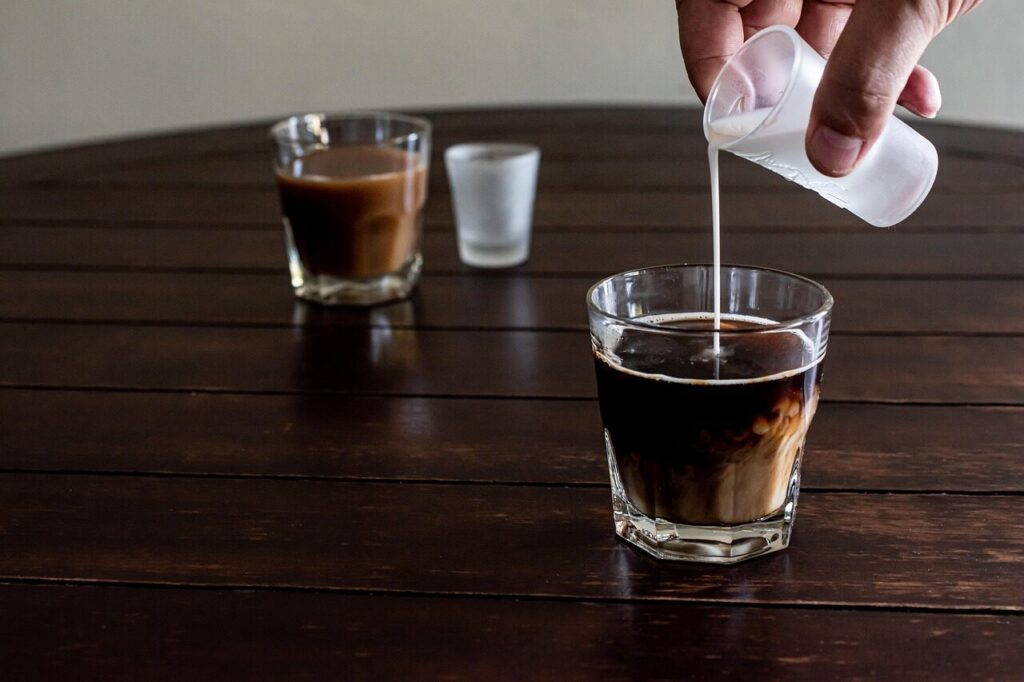
Oat milks marketed for baristas usually contain added fat and stabilizers, which help them hold texture when heated and keep them from splitting in coffee. Standard cartons often work for a quick latte, but they tend to steam thinner and separate more easily. Check the label, and if your first carton disappoints, try a different style before blaming your technique.
Two practical points:
- Start cold. Milk straight from the fridge gives you more time to build texture before it hits the target temperature.
- Check for gluten if you need to. Oats are often processed near wheat, barley or rye. If you avoid gluten for medical reasons, look for a product labeled gluten-free.
How to make an oat milk latte step by step
This makes one 240 ml / 8 oz latte with a double shot. If your espresso technique needs work, start with our guide to making a good espresso.
- Warm the cup. Rinse it with hot water so the drink does not cool too fast.
- Pull the espresso. Brew 18 g of coffee into about 36 g (1.3 oz) of espresso in roughly 25 to 30 seconds, with water around 93°C / 200°F. Pour it into the cup.
- Shake the oat milk. Solids settle in the carton, so give it a good shake, then pour 180 ml / 6 fl oz into the pitcher.
- Purge the steam wand. Let it blow for a second to clear out water.
- Add air briefly. Keep the wand tip just below the surface and let in a little air only until the pitcher feels slightly warm. Oat milk needs less stretching than dairy to reach a silky texture.
- Submerge the tip and swirl. Lower the wand a bit deeper and spin the milk into a whirlpool until the pitcher is hot but still holdable.
- Stop at 55–60°C / 130–140°F. Shut off the steam. Past about 65°C / 150°F, oat milk tends to thin and taste flat or cooked.
- Tap and swirl. Knock the pitcher on the counter to pop big bubbles, then swirl until glossy.
- Pour. Tilt the cup, pour steadily, and level out as it fills. A spoon can hold back extra foam if needed.
The full technique for dairy and plant milks is in our guide to steaming milk for a latte.

Making it without a steam wand

You can get a good oat milk latte without an espresso machine. Brew a concentrated shot with a moka pot or AeroPress, then heat the oat milk in a saucepan or microwave to 55–60°C / 130–140°F. Watch it closely, because oat milk goes past the target quickly.
For texture, a handheld frother or a jar works. Our guide to frothing milk without a frother walks through the methods. Expect lighter foam than a steam wand gives, but the flavor will be the same.
Picking coffee that suits oat milk
Oat milk has a toasty, cereal-like flavor. It sits best next to coffees with chocolate, nut or caramel notes, which usually means a medium to medium-dark roast. Bright, fruity light roasts can get buried or taste sharp against the sweetness, and their higher acidity makes separation more likely.
If you do like a lighter roast, let the espresso sit for a moment before adding milk, and pour the milk into the coffee rather than the other way around.
Fixing common problems
| Problem | Likely cause | Fix |
|---|---|---|
| Thin, watery texture | Overheated milk or a low-fat oat milk | Stop at 60°C / 140°F; try a barista-style product |
| Milk splits or looks grainy | Very acidic coffee, very hot milk, or old milk | Use a darker roast, cool the coffee slightly, use fresh milk |
| Big, bubbly foam | Too much air for too long | Shorten the stretch phase and tap the pitcher |
| Too sweet | Natural sugars in the oat milk plus syrup | Skip added sweetener, or choose an unsweetened oat milk |
| Flat, muddy flavor | Weak espresso for the amount of milk | Keep a 1:2 espresso ratio and reduce milk to 150 ml / 5 fl oz |
Iced and flavored versions
For an iced oat milk latte, pour the espresso over ice first, then add cold oat milk straight from the carton. No steaming is needed, and the method matches our iced latte at home recipe.
Oat milk pairs well with cinnamon, vanilla and cocoa. A teaspoon of syrup is plenty, since the milk already adds sweetness.
A simple routine to start with
Pick one oat milk and one espresso, and keep both constant for a few drinks. Change a single thing at a time, such as the milk temperature or the stretching time, so you can tell what made the difference. Within a handful of cups you will know exactly how your oat milk behaves.
Frequently Asked Questions
Is an oat milk latte sweeter than a regular latte?
Usually, yes. Oat milk contains sugars formed when oats are broken down during processing, even with no sugar added. Some products also contain added sweeteners. If you find it too sweet, choose an unsweetened version and skip any syrup.
Why does my oat milk curdle in coffee?
Heat and acidity are the usual causes. Very hot milk, very acidic coffee, or a carton that has been open too long can all make it split. Barista-style products tend to be more stable, and letting the espresso cool briefly also helps.
Can I make an oat milk latte with instant coffee?
You can, but it will be a milky coffee rather than a true latte. Dissolve a double portion of instant coffee in a small amount of hot water, then add heated, frothed oat milk. The flavor will be milder than espresso.
Does oat milk have less caffeine than dairy milk in a latte?
No. Milk, whether dairy or oat, contains no meaningful caffeine. The caffeine in a latte comes from the espresso, so a double shot has the same amount regardless of milk. If you are sensitive to caffeine, ask your doctor what suits you.