

The right home espresso machine is the one that matches the drinks you make and the effort you are willing to put in. If you want a flat white every morning with almost no fuss, look at a super-automatic or a semi-automatic with a good steam wand. If you want to learn the craft and taste the difference small changes make, a semi-automatic paired with a quality grinder is the usual answer.
One rule applies to every option: the grinder matters as much as the machine. A modest machine with a good grinder will beat an expensive machine with a poor one. This guide covers the types, the features that count, and the ones that mostly serve the sales page.
Start With the Drinks You Actually Make
Before comparing models, write down what you drink on a normal week. Straight espresso, Americanos and milk drinks ask different things of a machine. If you are unsure how espresso differs from regular brewed coffee in the first place, our comparison of espresso vs coffee covers it.
- Mostly straight shots or Americanos: Temperature stability and a consistent grinder count most. The steam wand hardly matters.
- Mostly milk drinks: Steam power and wand design become the priority, along with how quickly the machine switches from brewing to steaming.
- Several drinks in a row for guests: Look for a machine that can brew and steam at the same time, or an automatic that handles it for you.
- One drink a day: A simple, quick-heating machine is enough. Do not pay for capacity you will not use.
Also be honest about time. A semi-automatic setup takes a few minutes in the morning and some practice. If that sounds like a chore, an automatic machine will get used more often than a manual one gathering dust.
Four Types of Home Espresso Machine
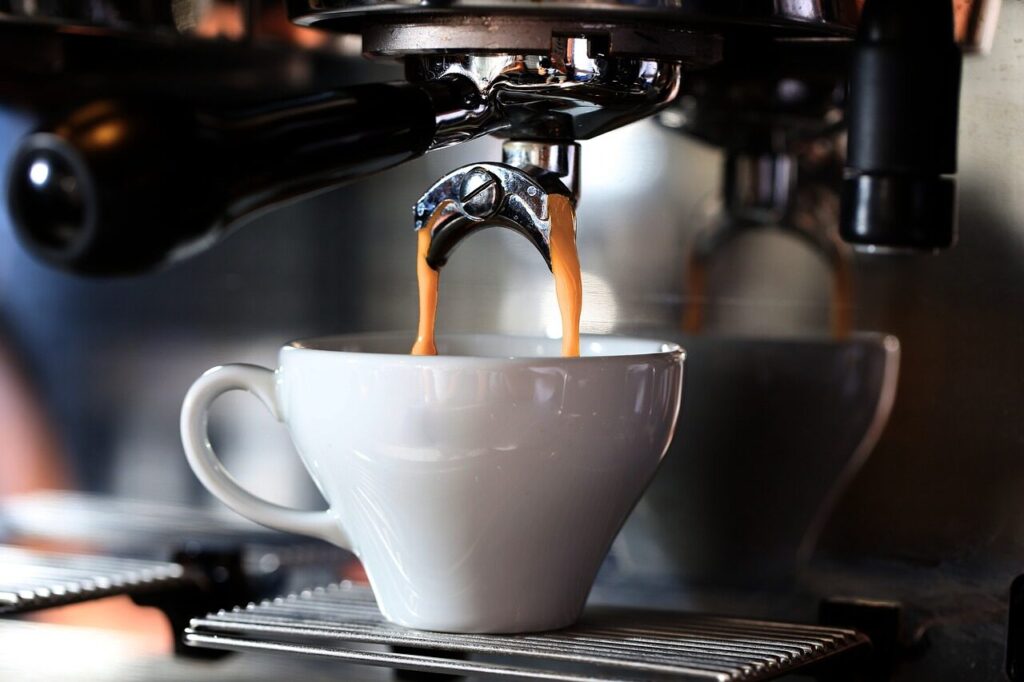
Home machines fall into four groups. They differ mainly in how much of the process you control and how much the machine does for you.
| Type | What you do | Best for | Trade-off |
|---|---|---|---|
| Manual lever | Grind, dose, tamp, and apply pressure yourself with a lever | Hobbyists who want full control | Steep learning curve, results vary with technique |
| Semi-automatic | Grind, dose, tamp; the pump and temperature are handled by the machine | Most people who want to learn espresso | Needs practice and a decent grinder |
| Super-automatic | Press a button; the machine grinds, tamps, brews and often steams milk | Busy households and offices | Less control, more internal parts to clean |
| Capsule or pod | Insert a capsule and press a button | Maximum convenience, minimal cleanup | Limited choice of coffee and little room to adjust |
Semi-automatics are the sweet spot for most readers because they teach you what is happening in the cup. Super-automatics make sense if consistency and speed matter more than tinkering. Capsule machines are the easiest option, but you are tied to the capsules they accept.
If you are not ready to buy anything yet, our guide to making espresso without a machine shows what you can do with simpler equipment.
Heating Systems: How the Machine Handles Brewing and Steaming
Espresso brews at a lower temperature than steam needs, so a machine has to manage two heat levels. How it does that affects speed, consistency and what you can do at once. Brew water is generally targeted around 90–96°C (195–205°F).
| Heating system | How it works | Good to know |
|---|---|---|
| Thermoblock | Heats water on demand as it flows through a metal block | Fast warm-up and compact; temperature can fluctuate more |
| Single boiler | One boiler serves both brewing and steaming | You wait while it changes temperature between the two |
| Heat exchanger | One steam boiler with a pipe that heats brew water as it passes through | Brew and steam together; needs a short cooling flush for consistent brewing |
| Dual boiler | Separate boilers for brewing and steam | Most stable and flexible; usually larger and heavier |
For one or two drinks a day, a thermoblock or single boiler is perfectly workable. If you often make several milk drinks back to back, a heat exchanger or dual boiler saves real time.

Features Worth Paying Attention To
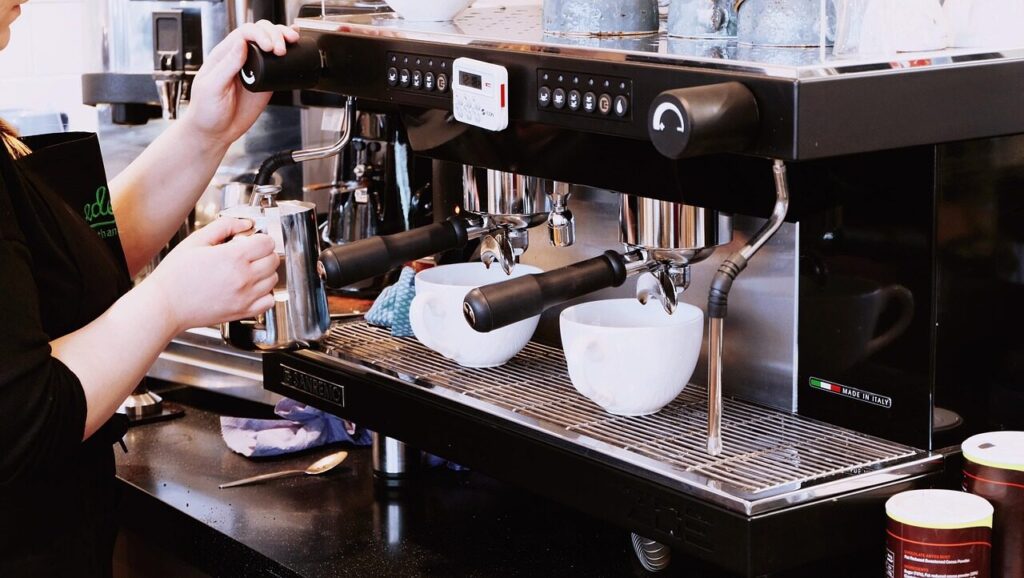
Spec sheets are crowded. These are the details that change your coffee or your daily routine.
Temperature control
A PID controller is a small electronic regulator that holds water temperature steady. It is useful because temperature shifts change the taste of a shot, sour when too cool and harsh when too hot. If you are puzzled by a bitter cup, our article on why coffee tastes bitter explains how heat and extraction interact.
Pump pressure
Espresso is traditionally extracted at about 9 bar at the coffee. Many machines advertise 15 bar or more, but that is the pump’s maximum rating, not the pressure that reaches the puck. Do not treat a bigger number as a better machine. A machine with a pressure gauge or an adjustable pressure setting can help you see what is happening while you learn.
Portafilter and baskets
The portafilter is the handle that holds the coffee. A 58 mm portafilter is the commercial standard, which makes it easy to find baskets, tampers and accessories. Smaller sizes exist and work, but your accessory choices narrow.
Many entry-level machines ship with pressurized baskets, which are built to produce crema even from pre-ground or unevenly ground coffee. They are forgiving but limit flavor. Standard (non-pressurized) baskets reward a good grind and careful prep, so check that the machine lets you switch.
The steam wand
For milk drinks, the wand matters more than almost any other feature. Look for a wand that moves freely and delivers steady steam. Automatic frothing arms are convenient, but they give you less say over texture. If you plan to practice, our guide on how to steam milk for a latte shows the technique, and milk is typically heated to about 55–65°C (130–150°F).
Pre-infusion
Some machines gently wet the coffee before full pressure is applied. This can reduce uneven extraction and is a pleasant bonus, but it should not decide your purchase on its own.
Budget for the Grinder and the Small Tools
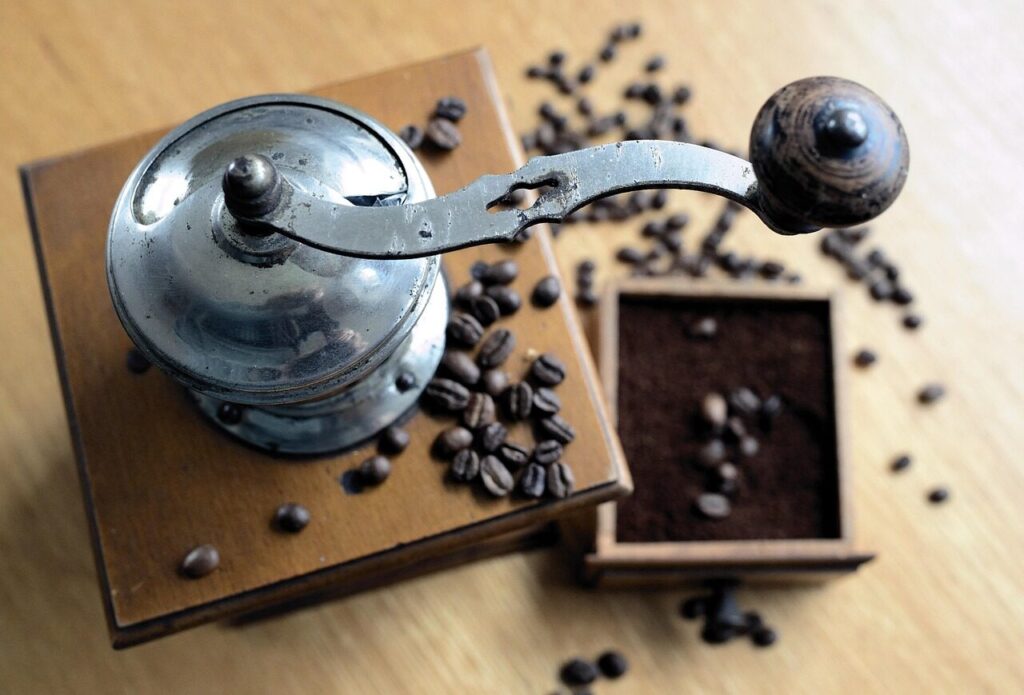
Espresso needs a fine, very consistent grind, and small adjustments change the shot dramatically. A burr grinder with fine adjustment is the target. Blade grinders produce uneven particles and cannot give you repeatable results. Plan for the grinder to take a large share of your total budget, not whatever is left over. Our guide to grinding coffee beans explains why burrs matter.
Check that the grinder adjusts in small steps, or infinitely, in the espresso range. A grinder that jumps from too coarse to too fine in one click will frustrate you.
Beyond the grinder, you will want:
- A scale that reads to 0.1 g, to weigh the dose and the finished shot
- A tamper that fits your basket size
- A steaming pitcher and a clean cloth, if you make milk drinks
- A knock box or small bin for used pucks
- Fresh beans in a sealed container
Some machine bundles include these, though the quality varies. Check what is in the box before you buy extras.
Space, Water and Upkeep
Measure your counter, including the height above it. Many machines need clearance to remove the water tank from the top, and a tall grinder next to it can leave you without room to work. Check the weight too if you plan to move the machine often.
Water is the quiet factor. Hard water leaves scale inside the machine, which can slow flow and damage heating parts. Soft or heavily filtered water can cause its own problems in some machines, so follow the manufacturer’s guidance on water type and descaling.
Daily care is simple: rinse the portafilter, wipe the wand right after steaming, and empty the drip tray. Machines with removable water tanks and brew groups are easier to look after. Our walkthrough on how to clean a coffee machine covers descaling and routine cleaning in more detail.
It is also worth checking whether spare parts and service are available where you live. Gaskets, shower screens and steam tips wear out, and a machine you can repair will outlast one you cannot.
Your First Week With a New Machine
Expect your first shots to be off. Start with a recipe of about 18 g (roughly 2 tbsp) of ground coffee yielding around 36 g (about 1.25 oz) of espresso in 25–30 seconds, then adjust the grind rather than the dose. Small changes tell you a lot. Our guide on how to make a good espresso walks through dialing in step by step.
Use fresh beans, change one variable at a time, and write down what you did. After a handful of sessions the machine stops feeling like a project and starts feeling like part of your morning.
Frequently Asked Questions
Can I use pre-ground coffee in a home espresso machine?
You can, especially in machines with pressurized baskets, which are designed to cope with it. Expect less flavor and less control, because pre-ground coffee goes stale quickly and its grind may not suit your machine. A grinder is the usual next upgrade.
Is a capsule machine real espresso?
Capsule machines use pressurized hot water to push through coffee, so the drink resembles espresso. You have little control over dose, grind or freshness, though. They suit people who value convenience and a quick cleanup over adjusting variables.
How long should a semi-automatic machine warm up?
It varies by heating system. Thermoblock machines are often ready within a minute or so, while boiler machines usually need longer, and larger ones may need a while for the group head to stabilize. Check the manufacturer’s guidance for your model.
How often do I need to descale?
It depends on your water hardness, how often you brew, and the maker’s instructions. Harder water means more frequent descaling. Many machines show a reminder, and your local water supplier can usually tell you how hard your water is.